




The Surprising Number of Cats Who Aren’t Taken to the Veterinarian

Take Your Cat to the Vet Day is only recognized one day a year in August, but routine wellness visits and checkups with your veterinarian are imperative for detecting disease early and ensuring your cat is healthy.
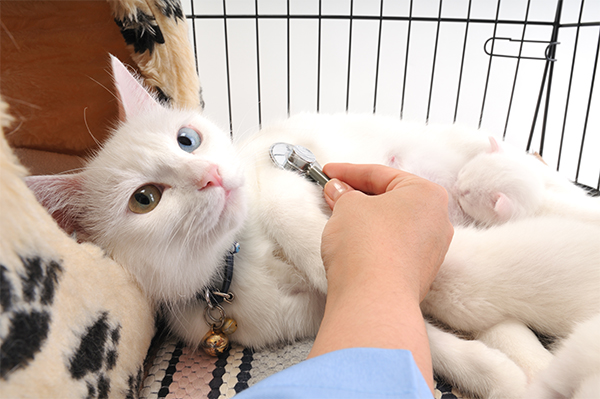
cat at veterinarian

Unfortunately, cat parents do not bring in their pets for veterinarian checkups nearly as often as dog parents do for a variety of reasons, including stress on the cat, the independent personality of cats and the assumption that they are healthy. Cats rarely show obvious signs of sickness, making detecting illness in cats extremely challenging. Often times, people do not realize their beloved cat is sick or something is wrong until they are at the end stage of a disease and treatment options are limited. 
 
So, today I would like to discuss why pet parents are reluctant to bring their cat to the vet, helpful tips for bringing your cat to the vet and most importantly, why routine wellness visits and checkups are so important.

Why is it so important to have your cat evaluated routinely for wellness visits with your veterinarian? 

Pets cannot always show us when they are not feeling well, especially if they are feeling mild ailments. In addition, cats hide sickness and pain as a survival tactic, as they do not want to show signs of weakness. Far too often, cat owners will bring their cat into the veterinarian hospital for an evaluation when they are noticing that something is “off” or their cat is not acting like themselves. Many times, when a cat is acting “sick”, they are at the end stages of a disease and there are not many treatment options available. This reason more than any is why it is imperative to have your cat evaluated yearly with your veterinarian, and have full bloodwork performed.

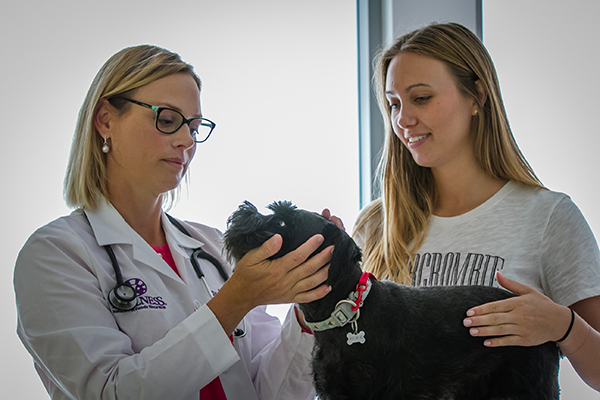
Veterinarians and veterinarian technicians are trained to detect abnormalities on physical examination that pet owners may not see.In addition, bloodwork allows us to detect disease early (well before your cat may be showing signs of sickness) and is crucial in treating and maintaining a long life for your cat.
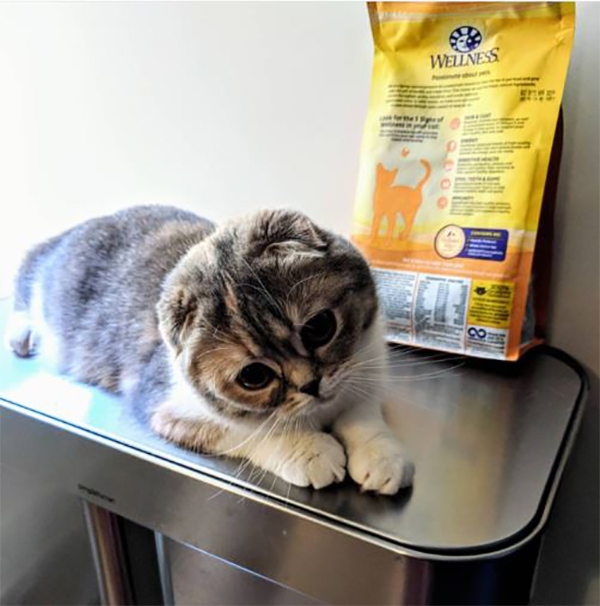
cat sitting

Photo via @le_chat_nikita

Why do pet parents not bring their cats into the veterinary hospital for routine checkups?


More than half the domesticated cats in our country have not been evaluated in the past year by a veterinarian. 

This statistic is startling and needs to be addressed. The most common reason why pet parents are not bringing their cats into the veterinarian is stress. Trips to the vet bring on stress for the cat, and stress for the parents in trying to catch and place their cat in a carrier, and transport them safely to the animal hospital. Cats do not like change, and can become very upset when forced to leave their home.
In addition to the high stress nature of cats, their independent nature tends to keep pet parents away from the vet hospital. Unlike dogs, cats do not demand the attention or require as much work. They can come across to us as not needing attention or care. Do not let this personality trait fool you. Independence should not equate to less attention or lack of wellness visits.  

My top tips on making your trip to the veterinarian less stressful for your cat:

  • At home visits: Some vet hospitals will offer mobile services and come to your home to evaluate your cat. Inquire with your veterinarian. Removing the stress of transport can significantly improve your cats state of being for veterinary visits.
  • Keep the carrier away: Cats are very smart and know when the carrier comes out, they are leaving their home. They will find a great hiding spot and stay there all day to avoid the carrier. I always recommend keeping the carrier away until you are ready to go to the veterinary hospital.
  • Mild sedatives: Inquire with your veterinarian whether your cat is a candidate for a sedative. Many times, these medications may take the edge off and relieve some stress.
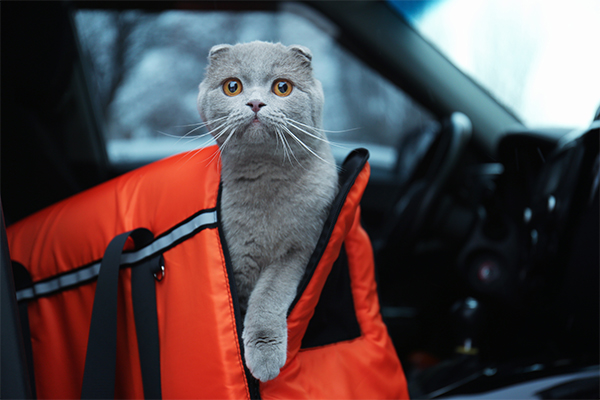
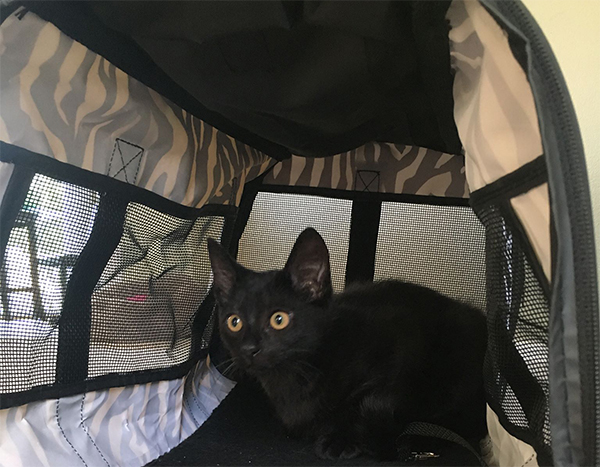
  • Enclosed carrier: Never assume your cat will do better without being in a carrier. When cats get scared, from a barking dog, or a new place, they tend to run away to hide. Often times the choice of a hiding spot is outside in a parking lot. Always bring your cat to the veterinary hospital in an enclosed carrier for their safety and yours.cat in car in carrier
  • Immediate examination room: Inquire with your veterinarian whether they can bring your cat into an exam room when you arrive at the animal hospital. A loud waiting room can cause undue stress and anxiety for your cat.

I hope this article inspires you to have your cat evaluated by your veterinarian. These cute little adorable guys rely on us to provide them with the best and most healthy lives they can have. The long-term health benefits for your cat far outweigh a day of stress and anxiety. As I always tell my pet parents, they may not think you are helping them, but you are providing them the best and longest lives you can. A moment of stress is worth a long life of health and wellness. As always, your pet’s health and wellness are my top priorities!

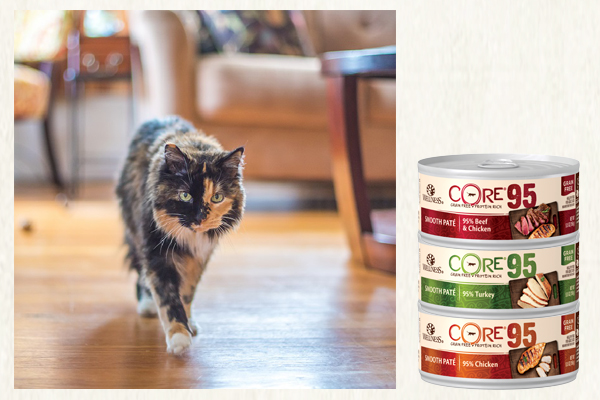
The Wellness CATalog: Decoding curious cat behaviors and finding food to fit each

Cat hunting for tasty treats

We get it, cat parenthood is hard to navigate! From decoding strange cat behaviors to finding that favorite recipe, you’re constantly solving puzzles to keep your cat happy and healthy. But we’re here to help! At Wellness Natural Pet Food, we know that no two cats are alike and what we choose to feed them not only nourishes them from the inside, but impacts how they look and behave on the outside. Our recipes fit the tastes of any personality or palate while providing the natural nutrition they need.

So whether your cat is always on the prowl, a couch potato who just likes to snuggle, or somewhere in between, we’ve got something for them, Catisfaction Guaranteed. Catisfaction Guaranteed means that Wellness stands by our products and guarantees you’ll find a tasty, healthy option your cat loves, risk-free. Love it or return it!

We’ve identified 8 unique personality types for our feline friends and the food we’d recommend for each. Read through to look for your cat’s personality and Wellness recipe suggestion, along with insight into cats’ behavior from Wellness veterinarian, Dr. Danielle Bernal. If your cat’s type is missing, post a note on the Wellness Facebook Community so we can provide a recommendation for you.

1. The Hunter


Is your cat always on the go? Does he run around the neighborhood or house, tiger-like, on the hunt for his next big catch?

Dr. Bernal Insight:
Though domestication for cats occurred 6,000 years ago, they’ve always had a high dependency on hunting to survive. Even today’s cats still show these hunting traits as it has only been 50 years since commercial pet food has been able meet their animal protein nutritional needs.

Try Wellness CORE 95%: Perfect for active cats in touch with their wild roots. CORE 95% is high in meat and protein to provide plenty of energy for adventurous kitties who need a re-fuel after scaling your curtains and “hunting” toy mice.

2. Persnickety Pete


Your cat is pickier than most kids. He sits, stares and paws at his food, unsatisfied no matter what you put in his dish.

Dr. Bernal Insight:
Fussiness is a trait that actually evolved out of a cat’s ability to protect themselves, helping them compensate for any nutritional deficiencies that may occur from only eating one thing and preventing them from eating foods that have the potential to make them ill.

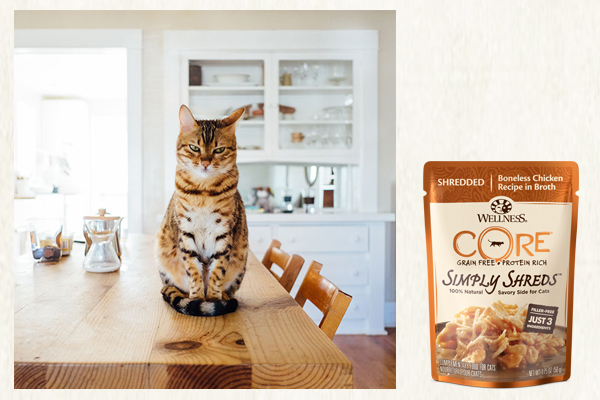
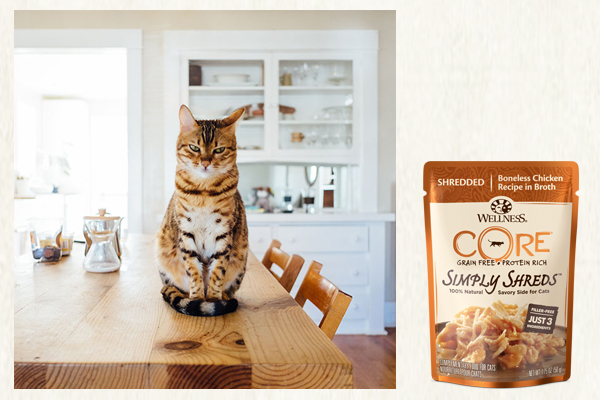
Try Wellness CORE Simply Shreds: Stop your fussy cat from turning his nose up at nutritious, grain-free dry food by mixing or topping with CORE Simply Shreds, made with four simple, meaty ingredients. He’ll be meowing for more!

3. The Golden Girl (or Boy!)


Your cat has been there, done that—and now she wants to relax on the back of the couch and enjoy the life of leisure that she’s earned throughout the years.

Dr. Bernal Insight:
Age-related changes can alter an animal’s daily energy needs, change the amounts and type of protein and fat needed, and modify levels of minerals and vitamins required. For older cats, look for functional nutrients such as glucosamine and chondroitin sulfate for joint health, prebiotics for healthy digestion and L-carnitine to help maintain weight.

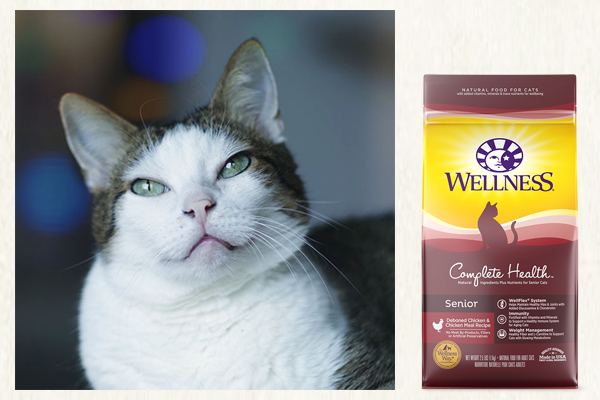
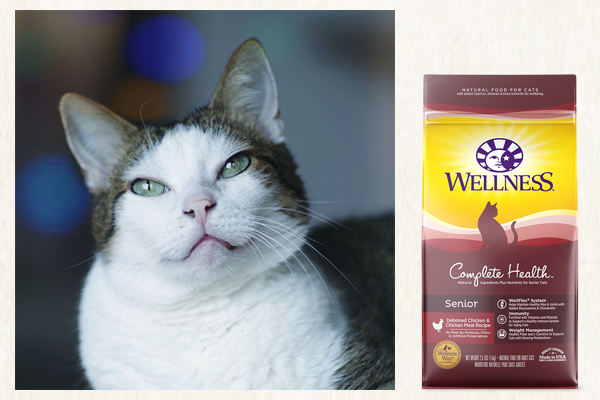
Try Wellness Complete Health Senior: For wise, mature cats enjoying their retirement, Complete Health Senior features the WellFlex system to keep hips and joints limber, and fiber and L-Carnitine to support a laid-back lifestyle.

4. The Social Butterfly


Does your cat walk all over your laptop when you’re trying to work or crawl under you when you’re working out in the living room? He can’t leave you (or your guests) alone until he gets some well-deserved attention.

Dr. Bernal Insight:
Cats are often called solitary creatures stemming from their preference to hunt alone, but overall, cats are social and show it in different ways. For some, that means hours of being petted while others prefer walking past you for a stroke or two.

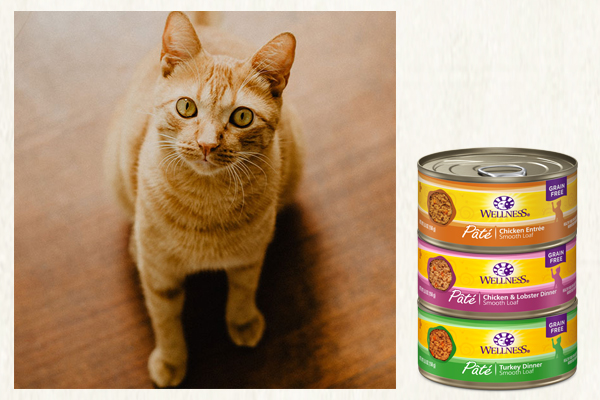
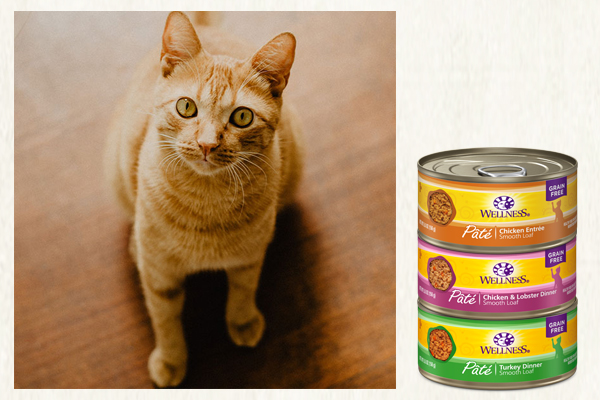
Try Wellness Complete Health Paté: Just like the friendly companion who greets you at the door each day, Complete Health Pate is the perfect choice for your cat. Smooth and soft, Complete Health is tasty nutrition in a wide flavor variety.

5. The Bottomless Pit


When other cat parents complain about their picky eaters, you have no idea what they’re talking about. Even though you feed him twice a day, your cat acts like he’s starving, always ready for the next meal.

Dr. Bernal Insight:
Cats can show signs of excessive hunger if something is upsetting them, like worms or hyperthyroidism. If they’re healthy, it may be time to check that they are eating their recommended amount of food, or look into food dispensing cat toys that mirror their instinctual hunting activities and make the meal last longer.

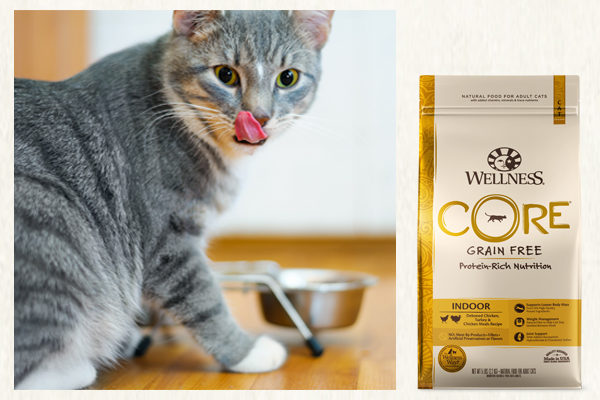
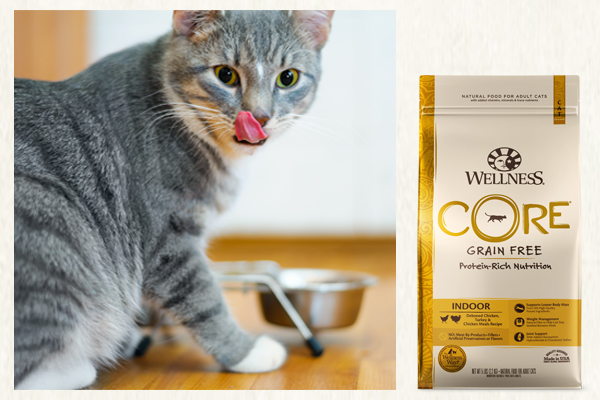
Try Wellness CORE Indoor dry: Voracious kitties stay satiated with filling CORE Indoor. And with 10% less calories than Original, CORE Indoor will help keep your cat at a healthy weight (even if you add a little more to their dish).

6. The Unlikely Pairing


You have, two, or three, or four cats – which also means many competing personalities. It’s nearly impossible to figure how to satisfy them all!

Dr. Bernal Insight:
While your cats may socialize throughout the day, they often prefer to eat alone in a low-stress environment since cats are solitary hunters. Consider different feeding times or potentially different rooms to make sure each cat is getting their fill.

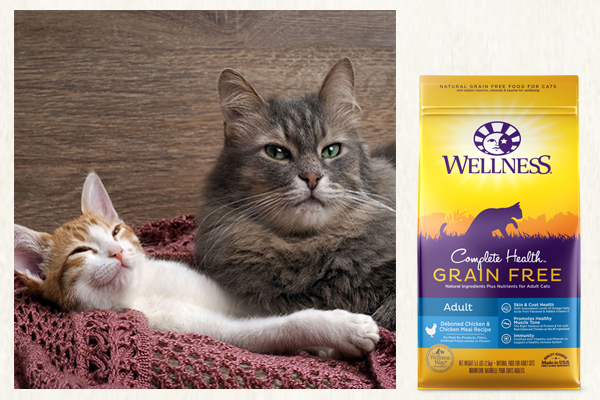
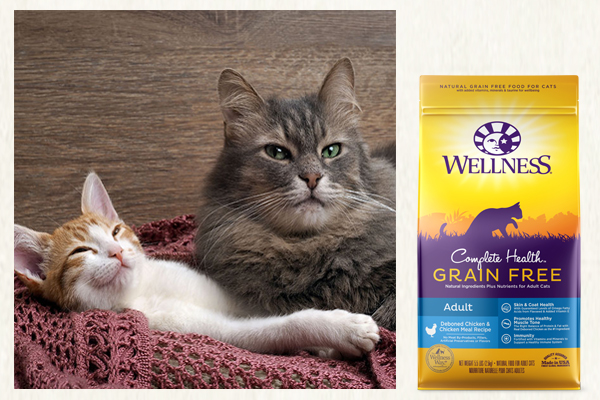
Try Wellness Complete Health Grain Free Adult: In a multi-cat home, this recipe is a crowd pleaser! This grain-free diet is highly-digestible in both young and old cats. Even if your cats have different personalities, they’ll agree on this.

7. The Foodie


If your cat was human, would she be the first in line to test out the most popular dish at a hot new restaurant, ready for that Insta-worthy snap of her meal? She‘s a feline foodie who won’t accept anything other than the perfect combination of taste and texture.

Dr. Bernal Insight:
Cats preferentially eat foods with a 50/50 ratio of protein to fat. Temperature and texture can also contribute to food acceptance, so look for their preferred flavors and forms from a premium brand of cat food.

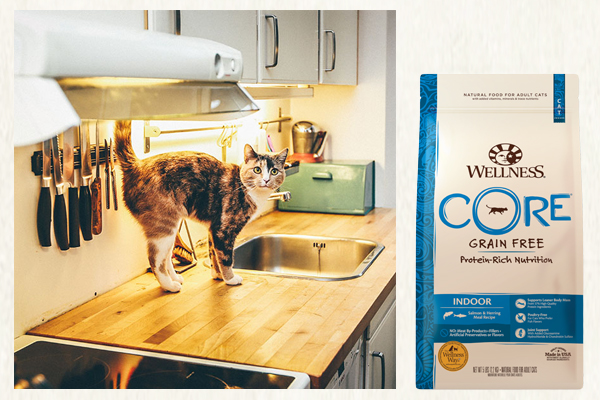
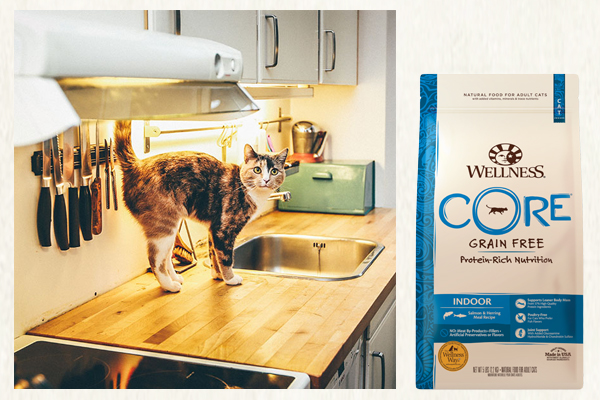
Try Wellness CORE Indoor Salmon & Herring: This recipe is a fan favorite among cats that savor the highest quality meals. Gentle on stomachs and a popular recipe that a lot of cats do well on, it’s grain- & poultry-free.

8. Confident


Your cat has that one spot on the couch he loves, refusing to sit anywhere else. He only plays with that one toy, everything else gets left aside. And when it comes to his food? He know exactly what he likes.

Dr. Bernal Insight:
While domestic environments give cats a plethora of choice, for some cats, their wild ancestor traits still shine through, allowing them to know exactly what they need and like.

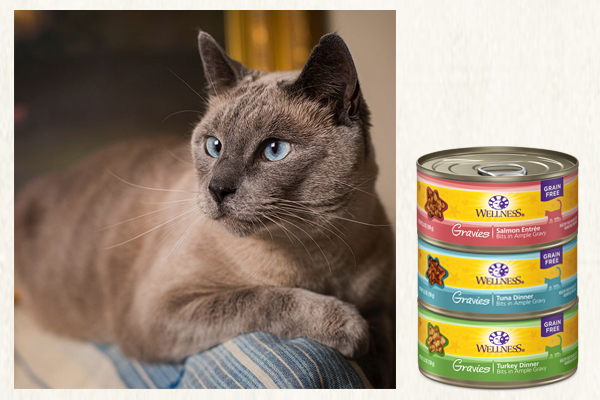
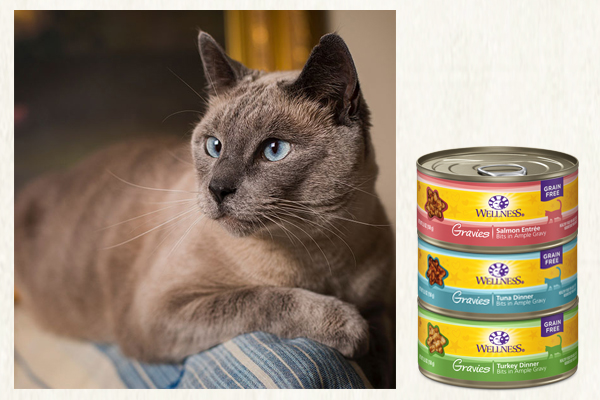
Try Wellness Complete Health Gravies: For headstrong, stubborn kitties who know what they like—gravy, and lots of it! Grain-free, healthy nutrition in an absolutely indulgent form that will make even the most discerning cats feel spoiled.

Contributor: Dr. Danielle Bernal

Dr. Bernal has over a decade of experience in veterinary medicine, specializing in animal nutrition. In her role as on-staff veterinarian with Wellness Pet Food, she educates pet parents on the importance of natural ingredients like wholesome meats and nutrient-rich superfoods. She passionately believes that proper nutrition helps pets lead happier, healthier lives. Dr. Bernal has been featured in radio, TV and print stories in numerous countries.
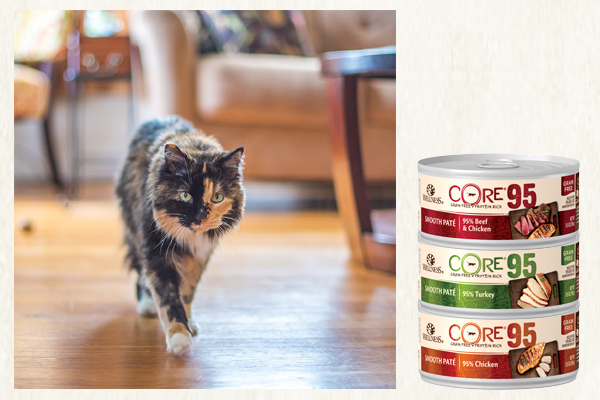
The Wellness CATalog: Decoding curious cat behaviors and finding food to fit each

We get it, cat parenthood is hard to navigate! From decoding strange cat behaviors to finding that favorite recipe, you’re constantly solving puzzles to keep your cat happy and healthy. But we’re here to help! At Wellness Natural Pet Food, we know that no two cats are alike and what we choose to feed them not only nourishes them from the inside, but impacts how they look and behave on the outside. Our recipes fit the tastes of any personality or palate while providing the natural nutrition they need.

So whether your cat is always on the prowl, a couch potato who just likes to snuggle, or somewhere in between, we’ve got something for them, Catisfaction Guaranteed. Catisfaction Guaranteed means that Wellness stands by our products and guarantees you’ll find a tasty, healthy option your cat loves, risk-free. Love it or return it!

We’ve identified 8 unique personality types for our feline friends and the food we’d recommend for each. Read through to look for your cat’s personality and Wellness recipe suggestion, along with insight into cats’ behavior from Wellness veterinarian, Dr. Danielle Bernal. If your cat’s type is missing, post a note on the Wellness Facebook Community so we can provide a recommendation for you.

1. The Hunter

Hunter
Is your cat always on the go? Does he run around the neighborhood or house, tiger-like, on the hunt for his next big catch?

Dr. Bernal Insight:
Though domestication for cats occurred 6,000 years ago, they’ve always had a high dependency on hunting to survive. Even today’s cats still show these hunting traits as it has only been 50 years since commercial pet food has been able meet their animal protein nutritional needs.

Try Wellness CORE 95%: Perfect for active cats in touch with their wild roots. CORE 95% is high in meat and protein to provide plenty of energy for adventurous kitties who need a re-fuel after scaling your curtains and “hunting” toy mice.

2. Persnickety Pete

Persnickety
Your cat is pickier than most kids. He sits, stares and paws at his food, unsatisfied no matter what you put in his dish.

Dr. Bernal Insight:
Fussiness is a trait that actually evolved out of a cat’s ability to protect themselves, helping them compensate for any nutritional deficiencies that may occur from only eating one thing and preventing them from eating foods that have the potential to make them ill.

Try Wellness CORE Simply Shreds: Stop your fussy cat from turning his nose up at nutritious, grain-free dry food by mixing or topping with CORE Simply Shreds, made with four simple, meaty ingredients. He’ll be meowing for more!

3. The Golden Girl (or Boy!)

Golden
Your cat has been there, done that—and now she wants to relax on the back of the couch and enjoy the life of leisure that she’s earned throughout the years.

Dr. Bernal Insight:
Age-related changes can alter an animal’s daily energy needs, change the amounts and type of protein and fat needed, and modify levels of minerals and vitamins required. For older cats, look for functional nutrients such as glucosamine and chondroitin sulfate for joint health, prebiotics for healthy digestion and L-carnitine to help maintain weight.

Try Wellness Complete Health Senior: For wise, mature cats enjoying their retirement, Complete Health Senior features the WellFlex system to keep hips and joints limber, and fiber and L-Carnitine to support a laid-back lifestyle.

4. The Social Butterfly

Social
Does your cat walk all over your laptop when you’re trying to work or crawl under you when you’re working out in the living room? He can’t leave you (or your guests) alone until he gets some well-deserved attention.

Dr. Bernal Insight:
Cats are often called solitary creatures stemming from their preference to hunt alone, but overall, cats are social and show it in different ways. For some, that means hours of being petted while others prefer walking past you for a stroke or two.

Try Wellness Complete Health Paté: Just like the friendly companion who greets you at the door each day, Complete Health Pate is the perfect choice for your cat. Smooth and soft, Complete Health is tasty nutrition in a wide flavor variety.

5. The Bottomless Pit

Bottomless
When other cat parents complain about their picky eaters, you have no idea what they’re talking about. Even though you feed him twice a day, your cat acts like he’s starving, always ready for the next meal.

Dr. Bernal Insight:
Cats can show signs of excessive hunger if something is upsetting them, like worms or hyperthyroidism. If they’re healthy, it may be time to check that they are eating their recommended amount of food, or look into food dispensing cat toys that mirror their instinctual hunting activities and make the meal last longer.

Try Wellness CORE Indoor dry: Voracious kitties stay satiated with filling CORE Indoor. And with 10% less calories than Original, CORE Indoor will help keep your cat at a healthy weight (even if you add a little more to their dish).

6. The Unlikely Pairing

Unlikely
You have, two, or three, or four cats – which also means many competing personalities. It’s nearly impossible to figure how to satisfy them all!

Dr. Bernal Insight:
While your cats may socialize throughout the day, they often prefer to eat alone in a low-stress environment since cats are solitary hunters. Consider different feeding times or potentially different rooms to make sure each cat is getting their fill.

Try Wellness Complete Health Grain Free Adult: In a multi-cat home, this recipe is a crowd pleaser! This grain-free diet is highly-digestible in both young and old cats. Even if your cats have different personalities, they’ll agree on this.

7. The Foodie

Foodie
If your cat was human, would she be the first in line to test out the most popular dish at a hot new restaurant, ready for that Insta-worthy snap of her meal? She‘s a feline foodie who won’t accept anything other than the perfect combination of taste and texture.

Dr. Bernal Insight:
Cats preferentially eat foods with a 50/50 ratio of protein to fat. Temperature and texture can also contribute to food acceptance, so look for their preferred flavors and forms from a premium brand of cat food.

Try Wellness CORE Indoor Salmon & Herring: This recipe is a fan favorite among cats that savor the highest quality meals. Gentle on stomachs and a popular recipe that a lot of cats do well on, it’s grain- & poultry-free.

8. Confident

Confident
Your cat has that one spot on the couch he loves, refusing to sit anywhere else. He only plays with that one toy, everything else gets left aside. And when it comes to his food? He know exactly what he likes.

Dr. Bernal Insight:
While domestic environments give cats a plethora of choice, for some cats, their wild ancestor traits still shine through, allowing them to know exactly what they need and like.

Try Wellness Complete Health Gravies: For headstrong, stubborn kitties who know what they like—gravy, and lots of it! Grain-free, healthy nutrition in an absolutely indulgent form that will make even the most discerning cats feel spoiled.

Contributor: Dr. Danielle Bernal

dr Dr. Bernal has over a decade of experience in veterinary medicine, specializing in animal nutrition. In her role as on-staff veterinarian with Wellness Pet Food, she educates pet parents on the importance of natural ingredients like wholesome meats and nutrient-rich superfoods. She passionately believes that proper nutrition helps pets lead happier, healthier lives. Dr. Bernal has been featured in radio, TV and print stories in numerous countries.

Beat the Back-to-School Pet Blues

header back to school

While most parents are fairly keen for their human children to leap back into the school year, pets are far less eager to see their two-legged buddies board the school bus and disappear for the better part of the day. For pets, back-to-school signifies a dramatic change in their daily routine, their activity level, and the amount of attention they get. Such a dramatic change can lead to anxiety and other unwelcome behaviors. 

Learn to recognize signs your pet is struggling with the back-to-school transition and take steps to help.

Back to School

Signs of Separation Anxiety and Depression in Dogs 

When dogs experience anxiety, they typically exhibit negative behaviors that you might feel compelled to punish; however, punishing bad behavior that is the is caused by separation anxiety will exacerbate the situation leading to more fearful, erratic, or aggressive behaviors.

Common signs of separation anxiety include:

  • Indoor bathroom accidents
  • Chewing furniture, shoes, etc.
  • Tearing up pillows
  • Shredding paper
  • Extensive barking and whining
  • Other mood changes 

In cases involving depression, dogs may act as such:

  • Hide
  • Act lethargic or unenergetic
  • Refuse to play
  • Show a loss of appetite 

Importantly, a dog experiencing these symptoms may only show one or two signs, so it’s important for pet parents to watch for new or different behaviors.

Back to School 2

Signs of Separation Anxiety in Cats 

Meanwhile, cats are less likely to experience trauma due to children returning to school; however, cats with backgrounds involving unreliable owners or multiple owners or abandonment could experience anxiety as a result of the dramatic change. Signs a cat is experiencing separation anxiety include:

  • Trembling
  • Social withdrawal
  • Hiding / escaping
  • Lack of interest in food
  • Signs of upset stomach in litter box
  • Mood swings 

How to Help Pets Struggling with Back-to-School Anxiety 

As previously noted, the worst way to manage back to school behaviors is to react with anger or aggression. Instead be calm. Use your own calm manner to signal to pets that everything is okay.

It can also help to get your pet a new toy to help them channel their energy in the interim before children return home from school.

An additional strategy for managing dogs with anxiety could be to implement crate training. This is effective if disruptive bathroom habits are problematic.

Exercise is another way to help your pet feel busy and to burn off energy previously burned off by interaction with children. Supplement those frequent play periods with extra walks until you can resume a normal schedule.

Lastly, give children time in the afternoons after school to play with pets. The bond between children and pets should still be encouraged and given time to develop. A new status quo for the children and your pet(s) during the new school year will need to be developed. This will help your cat or dog tremendously as it will help to assuage feelings of abandonment that may have transpired when your children returned to school.

family with dog

That said, anxiety and depression are real in cats and dogs when it comes to their younger owners returning to school. The best ways to battle these issues are to notice when they arise and to compensate with love, compassion extra exercise time, and the establishment of a new status quo that involves pet children bonding with human children.


Pet wellness is about more than great food—it’s about mental, physical, and emotional well-being. Wellness Pet Food believes in comprehensive pet health, which is why we do our best to create natural, healthy pet foods and snacks that keep your pet healthy and satisfied.  

6 Things Everyone Needs to Know about Assistance Dogs

When a service dog ran up to a woman on a busy street, she tried to shoo the dog away. Meanwhile, the dog’s owner was seemingly in distress. Thankfully, the dog owner wasn’t having a seizure or another life-threatening medical emergency; had he been, he may have died. August 5-11 is International Assistance Dog Week and is a perfect time to learn what assistance dogs do and what you should do when you encounter them.

1. What Do Assistance or Service Dogs Do?


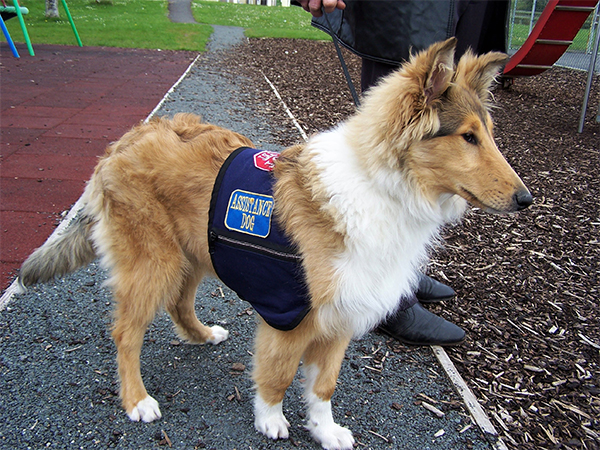
Service dogs are highly-trained canines taught to perform specific tasks for their owners to help their owners safely function on a daily basis. Their ability to perform their tasks can often mean the difference between life or death for their owners. Specifically, service dogs will:

  • Answer the door for their owner using a lever
  • Retrieve things for their owner
  • Bark to communicate with their owner or others
  • Assist their owner with mobility
  • Carries supplies for his owner in his backpack
  • Brings the phone to the owner to call for emergency help
  • Can bark at a speaker phone to signal there’s an emergency
  • Finds help when his owner is in distress
  • Calms his owner during a psychiatric episode
  • Alerts his owner if there is a fire or other disaster
  • Assists owners with psychiatric disorders by spotting unwelcome stimuli
  • Helping owners with psychiatric disorders keep from self-harming

Thus, when one sees a service dog with or without his owner, there are important behaviors and responses to observe as service dogs are more than just pets.

2. Don’t Touch Service Dogs without Asking Permission

It’s natural to want to pet a friendly dog; however, service dogs are almost always “on duty” with their owners. Passersby who stop to pet the dog without asking permission from the owner could put the owner at risk as they are distracting the dog from his duties.

3. Speak to the Owner, Not the Dog


Once again, it goes against many dog-lovers’ nature to not speak to the dog. For the same reason that you shouldn’t pet a service dog without permission, you should also not speak to the dog—it could distract them.

3. Don’t Try to Feed the Service Dog

Food is also a distraction for dogs that are out with their owners. Even if you happen to have a pet snack or some kind of food that is approved to give to a stranger’s dog, resist the temptation to do so. Service dogs are well-treated. They are well-fed and get plenty of play time, which helps to keep them healthy and well-rounded. 

4. Keep Your Dog Away from the Service Dog

There are no guarantees for how two unfamiliar dogs will react to one another, so it is best to keep the service dog focused and to avoid any kind of conflict between animals by keeping your dog away from the service dog. You can always ask permission for your dog to greet the other dog, but it is important to respect the owner’s wishes if they say ‘no’.

5. Do Not Act Offended if You See a Service Dog in Stores, Restaurants, Etc.

There are many reports of people who act offended when they see service dogs in settings where animals are not usually allowed; however, the dog is there to assist his owner and knows not to do anything that will disrupt that environment. The best thing you can do when you see a service dog and his owner is to leave them be just as you would any other person.

6. Follow a Service Dog without His Owner

The exception to leaving service dogs be is if you see a service dog without his owner. If you do or if an owner-less service dog approaches you, assume there has been an emergency and follow the dog. The dog is well-trained and will lead you to the crisis. Responding with a sense of urgency could save someone’s life.
Dogs are incredible companions and deserve nothing but the best, which is why we at Wellness Pet Food are committed to creating natural, nurturing foods, snacks, and treats that support lifelong pet health and happiness.

Wellness Pet Food Employee Completes His First Ever Cat Adoption!

Hi, I’m Rich, the Customer Marketing Manager for Wellness Pet Food. I consider myself a family man first and a marketer second. I started here a little over a year ago, and for the last few months, I was faced with my daughter’s daily requests to adopt a pet.

My coworkers can attest to how hesitant I was about bringing another pet or pets into the family. It’s been a while since my last pet, and since it’s such a big decision, it’s not one that I took lightly. but after talking with my coworkers at Wellness who are all animal lovers, I became compelled to take the plunge again into pet parenthood. And I’m glad I did! 

Pre-Adoption: Chase and Nadia Come Into Our Lives

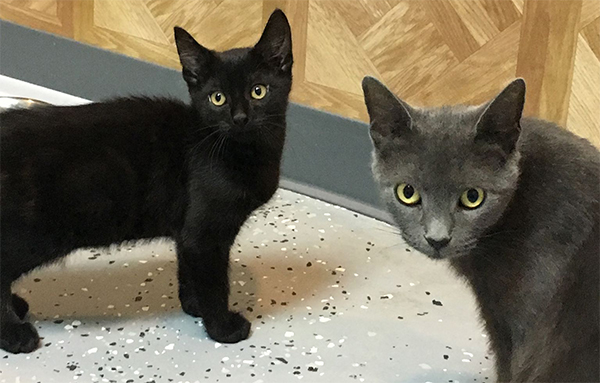
As my daughter and wife were scanning for cats online, they discovered Chase’s photo. My daughter fell in love with Chase instantly. When they met Chase for the first time they discovered Nadia was Chase’s mom and that the adoption center really didn’t want to break the two apart. Since we were looking for both a male and female cat, one kitten, and one a young adult, it was a match made in heaven! 
 

chase and nadia in the shelter

The first time we met Chase and Nadia at the shelter.

Adoption Day

We adopted Chase and Nadia on July 6. Nadia and Chase are originally from the Jersey Shore. The owners of Cat Tales Rescue in Seabrook, NH, learned of Chase and Nadia through a friend. They believe Nadia to be a Russian blue but since Nadia was discovered with just Chase in early May, they are not sure of her background – if she escaped from a home, or was a stray. Either way, it was time to bring them both home!


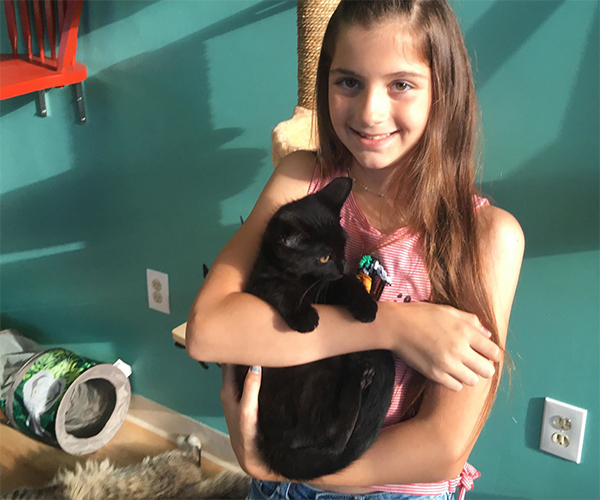
cat adoption

My daughter with Chase, right before we brought him home!

cat adoption

Welcome home, Chase!

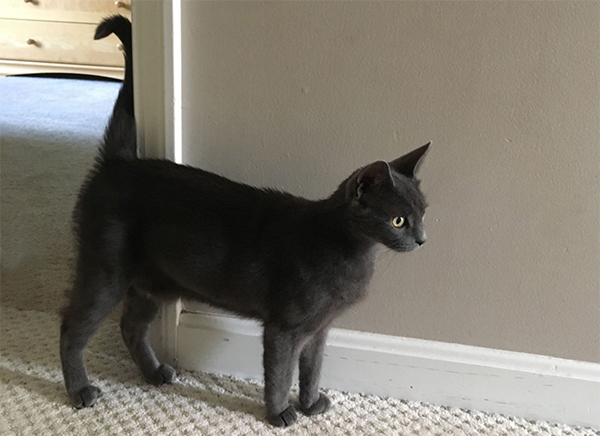
cat adoption

During the first hour Nadia came home, she started exploring.

cat adoption

Chase is a typical young kitty–he started playing almost as soon as he got home!

All Settled In

Over the short time we’ve had them, they’ve quickly become part of the family. Chase and Nadia have already shown us what wonderful cats they are, and we’re so lucky to have them.

cat adoption

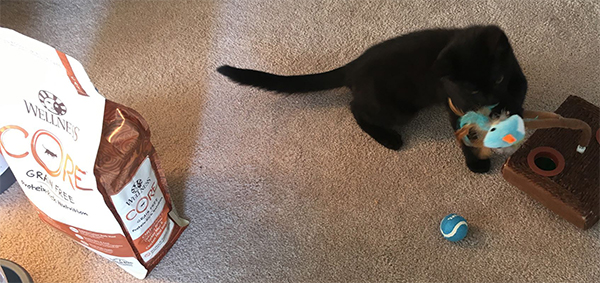
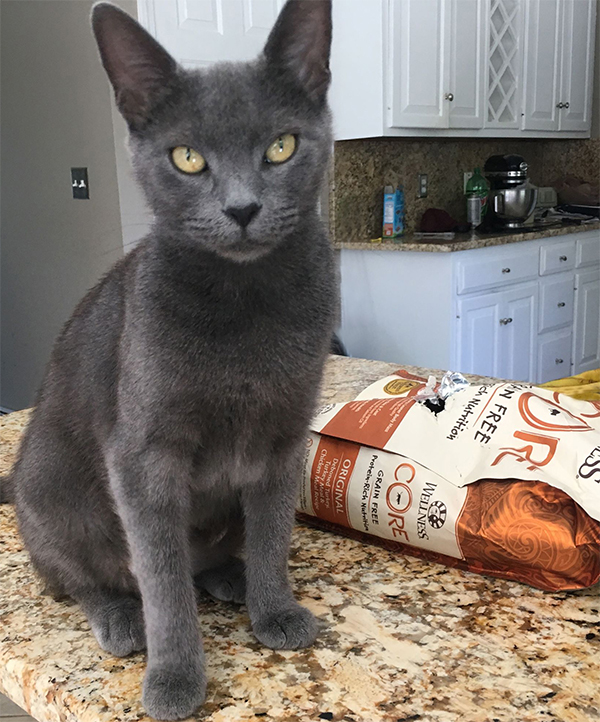
Nadia was a little too excited for dinner. Can you spot what she did to the CORE bag?

cat adoption

On day two, Nadia and Chase were fully settled into our home.

So, what does the Wellness Customer Marketing Manager feed his cats?

We spoil our growing kitties with CORE Kitten and CORE Original for dry, and switch up their diet with CORE pâté for kittens, CORE Simply Shreds varieties and CORE pâté. And for treats, we alternate between Kittles flavors. They love their food. They eat it right up! Be sure to try Rich’s favorites next time you’re shopping for your feline friends!

10 Pet Safe Indoor Plants to Beautify Your Living Space

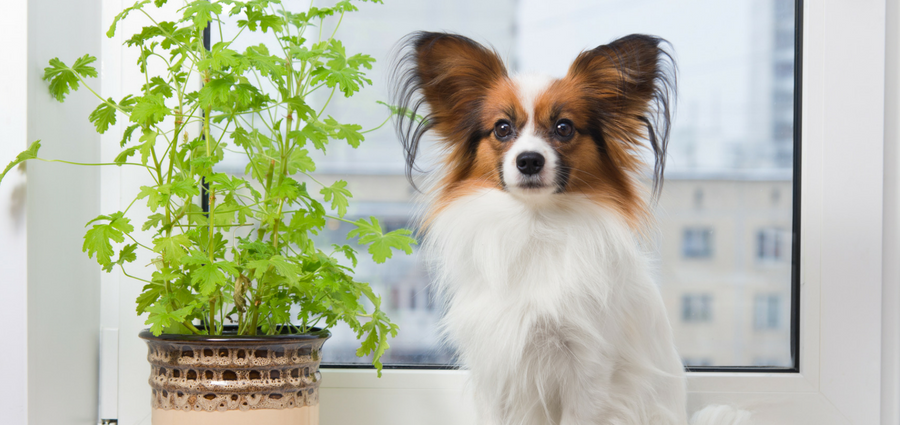
Nothing freshens your indoor environment like natural greenery. Many such plants are even known detoxifiers, but some plants (even the detoxifiers) are poisonous to cats and dogs; however, you can safely spruce up your interior with any one of these 10 pet-safe indoor plants.

Palms


Palms that perform well indoors (such as bamboo palms, areca palms, or dwarf date palms) add style and texture to your home. Not only that, but these palms also boost oxygen levels while removing various common toxins from your home’s air.

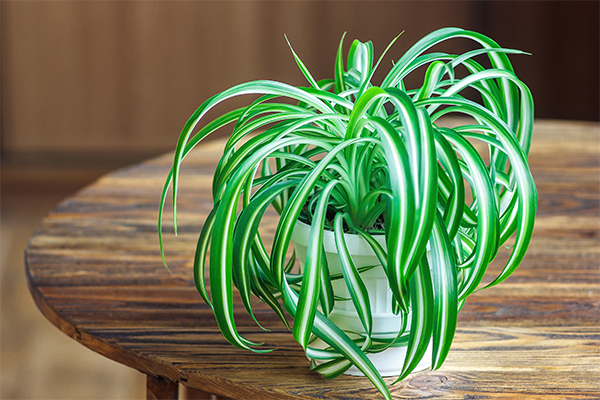
Spider Plant

spider plant pet safe plants
Like palms, spider plants add texture to any environment. Long—often variegated—leaves protrude from the plant’s center. Spider plants can hang in a pot or sit. Their sizes vary; the fact that they purify the surrounding air is an added benefit. 

Bamboo


Unless you’ve got an atrium or a courtyard, it’s probably best to go for the small, potted bamboo plants; however, bamboo not only creates an exotic aesthetic while serving as a detoxifier, it is also safe for cats and dogs. 

Boston Fern

boston fern
A homier plant that’s easy to keep alive and that looks great hanging from the ceiling is the Boston Fern. While ferns look lovely in any environment, keep in mind that not all ferns are pet-friendly.

Bromeliads


Bromeliads are a striking, colorful, tropical plant characterized by large, long green leaves and a brightly colored flower reminiscent of a pineapple. 

Lipstick Plant


Another popular, colorful pet safe plant is the Lipstick Plant (Aeschynanth). The plant is characterized by vibrant, glossy leaves and little flowers “peek” out of tubes, bearing a striking resemblance to lipstick in its tube. 

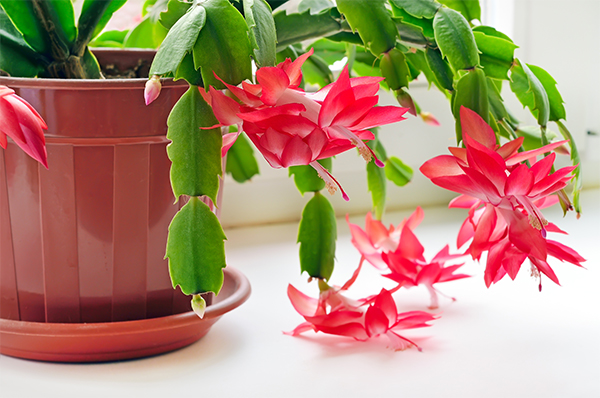
Christmas Cactus

christmas cactus pet safe
Don’t panic…unlike other types of cacti, Christmas cacti don’t have spikes or toxin dangerous to pets. Christmas cacti are small potted plants with small, colorful blooms. As suggested by their name, these plants flower around December, which is often a welcome pop of color during the winter.

African Violet


For a pop of year-round color, the African violet is an ideal choice. Placed in a warm location where there’s lots of light, African violets are very prolific non-toxic flowing plants.

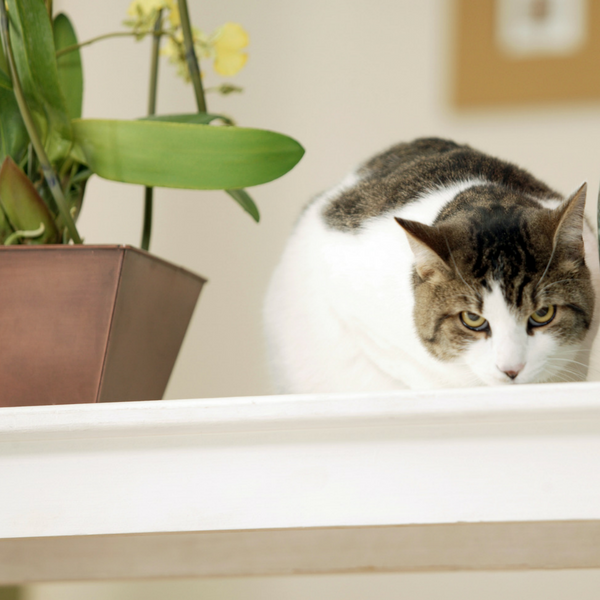
Phalaenopsis Orchids

Orchid with cat
Not only are this varietal of orchids beautiful and not poisonous to cats or dogs, but their flowers are also edible. Consuming edible flora is a growing trend; though, most who grow Phalaenopsis orchids prefer them for their aesthetic, not their culinary, qualities.  

Many Succulents

succulents safe for pets
Succulents are a favorite of many who cultivate indoor plants. Among the pet-safe varieties are burros tail (sedum morganianum), haworthia, hens and chicks, echeveria, rosettes, etc. Some are, however, toxic. Before you get a new succulent or other plant, review the list of toxic plants available here on the ASPCA website. 

Keep pets from snacking on nontoxic indoor greenery by ensuring they’re fed a healthy diet rich in all-natural proteins such as those made by Wellness Pet Food. Visit our website to see wet and dry foods as well as snacks and treats. Wellness makes something for every cat or dog’s dietary needs. 

Dr. Alison’s Top Tips On Keeping Your Pet Safe On The Fourth of July

It is amazing how quickly the Fourth of July has come around. Next week people around the country will be celebrating the birth of our freedom with BBQs, parties, celebrations and fireworks. Although this is a very exciting holiday and time for us, it can be a very dangerous and scary time for our pets. As a small animal veterinarian, this is one of the busiest times of year for seeing pet emergencies at the animal hospital. So, today I would like to give you my top tips on keeping your pets safe during the Fourth of July holiday. Let’s get started!

Keep Your Pets Away Indoors and Away From Fireworks

Many pets are terrified of the loud sounds of fireworks. They can show mild signs of anxiety like hiding, and more severe signs like destruction, shaking and harming themselves. If your pet has a fear of fireworks make sure to be prepared. If possible, bring them to a place where the fireworks cannot be heard. I recommend not taking them with you to the fireworks display, even if your pet is not fearful of loud sounds. In areas with many people and loud sounds, your pets may become frightened and show unpredictable behaviors. Leaving your pet in the comfort of their home is always a safer bet. 

BBQ’s and Parties Can be Dangerous for Your Pets

The Fourth of July is a big holiday for BBQs, but these cookouts can be harmful to our pets. I see a lot of upset stomachs during this time of year because of table scraps and foods that guests give pets.

Dogs and cats are used to eating the same food every day. Their gastrointestinal tracts develop a natural flora or bacteria, that specifically digests their regular food. When they get something that they aren’t normally accustomed to, such as burgers or hot dogs, they can develop severe inflammation with vomiting and diarrhea.

It can also lead to more serious conditions such as pancreatitis. In addition to an upset belly, many of foods in large quantities are toxic to our pets, such as grapes, onions, garlic and raisins. Grapes and raisins are safe for cats, but keep onions and garlic away from them. Some cookout foods can also be a risk of choking or obstruction such as corn on the cob, fruits with pits, and foods with bones, toothpicks or skewers. Make sure to talk to any guests, especially kids, before summer parties and remind them not to feed your pets any food. 

You want to enjoy the party too, not spend it looking after a pet with an upset stomach. There is no need for your pets to feel left out. I tell all my pet parents to have treats and food easily accessible during the holiday festivities and spoil your pets rotten. I absolutely love and trust Wellness CORE and it is what feed my own dog. Wellness CORE is a balanced diet that is grain free, contains all the highest quality ingredients, added supplements (omega 3 fatty acids, and glucosamine) and higher protein for lean body mass and muscle tone. You can check out more details on hosting a pet-safe BBQ here.

Make Sure to Have Your Pet Microchipped and Properly Identified

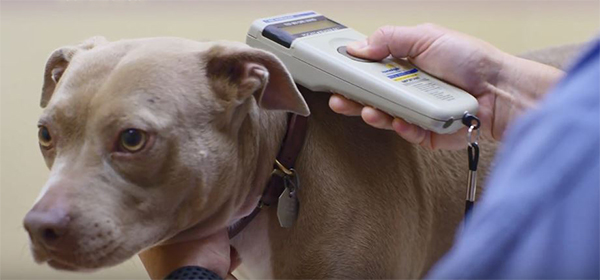
Try to keep your pet calm and easily identified. With all the noise and celebrations, the Fourth of July can often be scary and stressful for pets. I recommend dogs and cats be kept in a separate room away from access to outside. Also, the Fourth of July is one of the most common times we see lost pets. With the celebrations and loud noises, pets become extremely frightened which leads to them escaping to find shelter. Always make sure your pet is wearing proper identification. I have reunited many pets with their families by using microchip identification. I always recommend microchipping your pet. 

Speak to Your Veterinarian About Giving Your Pets Probiotics A Few Days Prior to the Fourth of July

We all know the benefit of probiotics for ourselves, but did you know that they have the exact same positive effects for our dogs as they do for us? As a small animal veterinarian, I prescribe probiotics all the time for my patients. I utilize probiotics are preemptively if I know my patients will be stressed, such as the Fourth of July. Stress in pets can lead to upset bellies which result in diarrhea. Probiotics are a great way to keep your pets gut healthy and prepared for the stress of the holiday. Ask your veterinarian if your pet is a candidate.

Speak to Your Veterinarian About A Possible Sedative For Your Pet For The Fourth of July

I see many of my clients right before the Fourth of July for sedatives for their pets. If your pet exhibits extreme anxiety from the sounds of explosion, contact your veterinarian for mild sedatives or anti-anxiety medications that can be given to your pet in preparation for the holiday. 

Happy Fourth of July everyone! I hope you have a wonderful and safe holiday. I want to ensure that you get to celebrate and enjoy this holiday and not be spending it at the veterinary hospital with a pet emergency.  As always, your pets’ health and wellness are my top priority.

Add Variety and Make Your Dog’s Mealtimes More Exciting with Rotational Feeding

Rotational feeding cover photo

Note: Rotational feeding is not recommended for pets with food allergies or sensitivities. Some animals with food allergies can be predisposed to developing further allergies.

There are many ways to add variety to your pet’s mealtimes. Rotational feeding can add variety through flavor (ex. chicken, lamb, salmon or pork), texture (ex. kibble, wet food, freeze-dried, air-dried) and nutrients (ex. Amino acids, minerals, fatty acids). For some pet parents, adding variety means mixing kibble and wet food together in the bowl, while for other pet parents it might mean feeding kibble for breakfast and wet food for dinner. Others may choose to only feed dry kibble, but rotate flavors with each new bag that they purchase. Any of these combinations is acceptable – they all add variety!

While rotation is not essential, there are potential benefits of following a rotational feeding plan for your dog or cat.   

Don’t let your pet become food bored. Rotational feeding can help maintain and or increase your pets interest in eating. Also, while a complete and balanced dog food guarantees that your dog will get sufficient nutrients, rotating foods allows your dog to consume ingredients that could be  richer in certain vitamins, minerals and amino acids than others, which contributes to overall health and wellbeing.

OK, I’m interested – how do I start a rotational diet?

When starting a rotational feeding program, pet parents should look for recipes that have similar fat content, fiber content, and ingredients to minimize risks of indigestion.  When rotating from one product to another, be sure to follow the feeding guidelines for each product to ensure your pet is getting their daily nutrient requirements without overfeeding.

The most common approach to rotational feeding is through the variation of protein sources. Each protein source (such as chicken, lamb, beef, and fish) has unique benefits and differs in their amino acid, fatty acid, vitamins and mineral content. Since each protein source naturally contributes different levels of nutrients, complete and balanced pet foods are always formulated to prevent any nutrient deficiencies – meaning that other ingredients are added to the protein in appropriate amounts to ensure a healthy, balanced diet. 

Benefits of common protein sources:

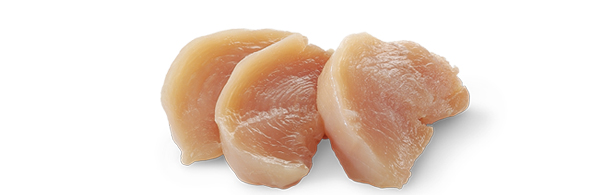
  • Chicken is a highly palatable and relatively lean protein. It is a very good source of B vitamins, phosphorus, selenium, and linolenic acid (omega-6 fatty acid) chicken
  • Lamb is a highly digestible, energy-dense protein. It is a good source of B vitamins, phosphorus, zinc, iron, and linolenic acid and conjugated linolenic acid (omega-6 fatty acid). Conjugated linolenic acid is becoming an increasingly popular nutritional supplement as it can help with ideal weight management.lamb
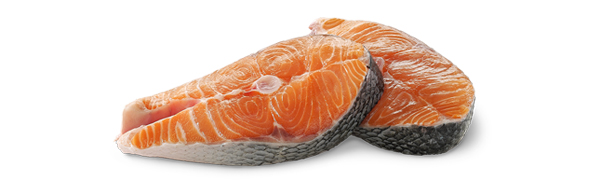
  • Salmon is a very palatable protein source that is moderately energy-dense. It is a good source of vitamin A, B vitamins, phosphorus, selenium, iron, and omega-6 fatty acid (arachidonic acid). It is also an excellent source of the long-chain omega-3 fatty acids EPA and DHA.salmon

Are you interested in trying rotational feeding? If so, you can browse our high-protein, grain-free CORE dry dog food options. And if you need some advice, our knowledgeable Consumer Affairs team is happy to help!

No More Boring Bowls™! How To (Safely) Bring Excitement to Your Dog’s Bowl with Mixers and Toppers

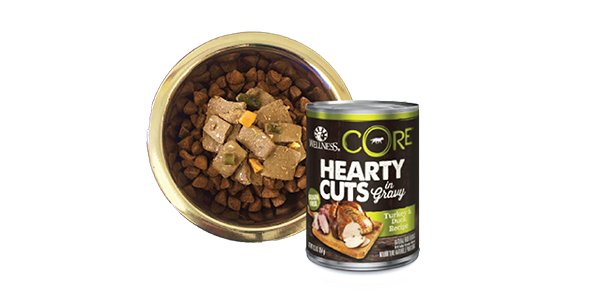
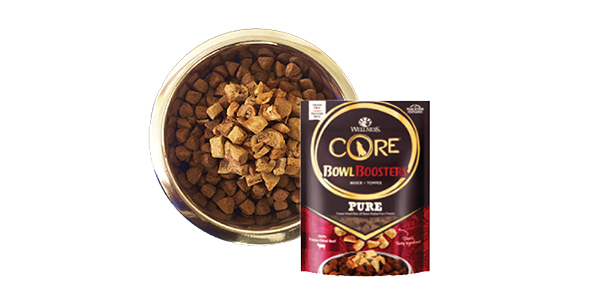
Wellness CORE dog food Mixers and toppers blog coverWellness CORE dog food Mixers and toppers blog cover

While premium natural complete and balanced kibble delivers all the nutrients your dog needs to thrive, mixing in a wet food or adding a topper is a great way to significantly improve the aroma, taste and texture of your dog’s meal – and make their bowl more exciting!

Mixers and toppers can add a boost of nutrients such as proteins, vitamins and minerals and can also be your saving grace if your dog is fussy or food-bored. Simply adding a mixer or topper to their dry food you can lead to bowls that are licked-clean and amplify your dog’s excitement about mealtime. 

Q. How do you add variety through mixers and toppers, without negative side-effects such as digestive upset or weight gain?

There is no golden rule about how you should add toppers or mixers, but there are general guidelines:

  1. Talk to your veterinarian. Some dogs have unique nutritional needs or need tailored life stage or lifestyle nutrition.  Your vet can ensure that you are serving the right type of food.taking dog to veterinarian
  2. Choose recipes appropriate for your dogs’ life stage and lifestyle. A puppy, a senior, an active athlete, a couch potato: these are all unique dogs that require customized nutrition. When selecting a mixer or topper make sure you choose one with a similar life stage or lifestyle classification as your dry so that your pet is getting all nutrition they need tailored to their needspuppy with senior dog
  3. Select high-quality products. Variety must not compromise nutrition or predispose your dog to suffering the risk of digestive upset. Select products from a brand that you know and trust, and one that offers enough variety that you can rotate through forms and/or flavors.
  4. Pay attention to feeding guidelines. All pet foods have unique, specific feeding recommendations. As you combine products, it is very important to follow these recommendations to avoid overfeeding. For example, wet food contains considerably less calories per gram than dry kibble, so if you decide to substitute combine wet and dry food, you cannot simply swap-out a cup of kibble for a cup of wet food. Check each mixer or toppers packaging for feeding guidelines.
  5. Introduce new formats gradually. Most dogs are used to eating the same thing every day. When you introduce a new form, flavor or brand to your dog’s diet, do so gradually over 3-7 days. Start with just a tablespoon of the new product and increase over the course of a few says until you are serving the perfect meal on day seven.
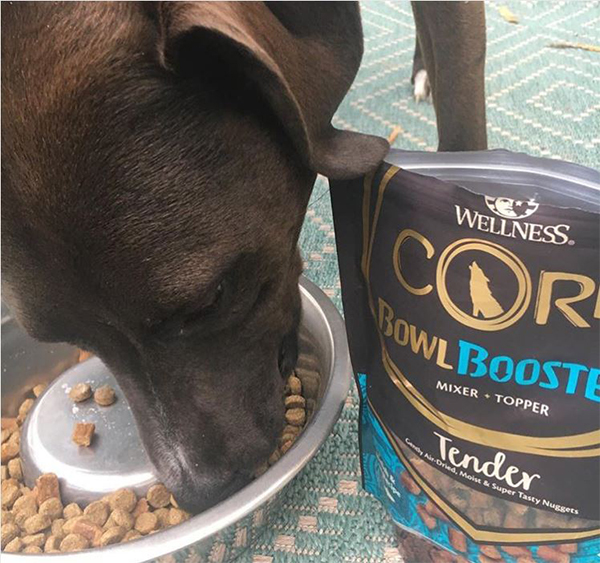
    Dog enjoying CORE Bowl Boosters Tender

    Heeler-mix, Choco, enjoying CORE Bowl Boosters Tender Whitefish & Salmon on top of his kibble.

  6. Don’t let wet food sit-out in the bowl. Some dogs like their wet on top, others like it mixed in, other like it as a separate meal. You know (or will learn) how your dog likes their wet food. Just remember that, once opened, wet food should not stay out at room temperature for an extended amount of time as it can easily spoil, particularly in warm weather. So, keep portions small and serve it how your dog wants it.
  7. Always keep plenty of fresh water available.

About This Page

Date:

25/06/2018

    Be the best pet parent you can be. Join for expert advice.

    Sign Up