



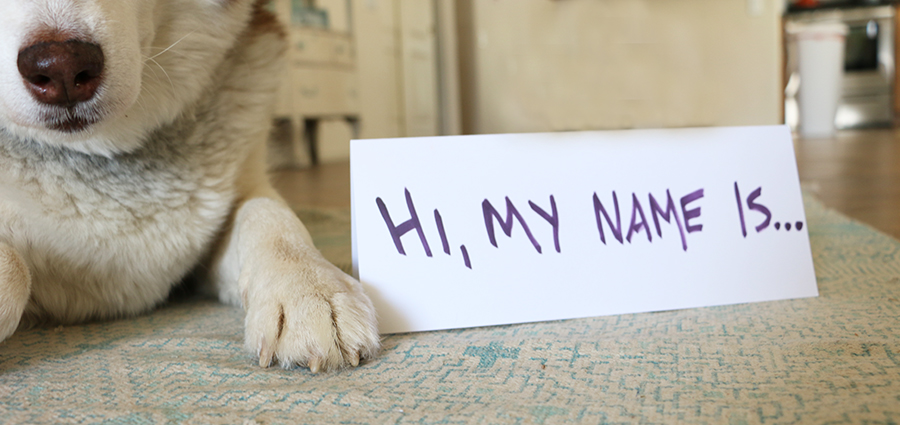
The Art of Naming Your Pet

In Romeo and Juliet, Shakespeare wrote that “A rose by any other name would smell as sweet,” which is true…while names don’t shape the person, there are some names that fit the personality. For example, Romeo and Barbarella don’t have the same ring. When it comes to naming people and pets, finding the right name to fit the individual character is truly an art. Here are some things to consider when naming your pet.

Tips for Picking a Good Pet Name
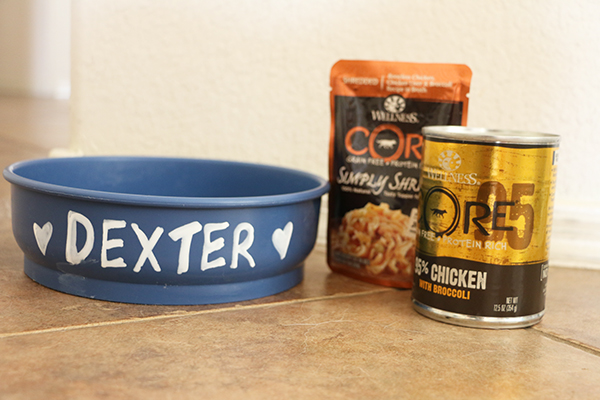
how to choose a name for your pet
 Getting a new cat or dog is very exciting, but before you dive right into selecting a name, keep these important tips in mind:

  • Select a one or two-syllable name; anything longer will be hard for your pet to recognize.
  • Don’t pick a name that sounds like a command. For example, Kit sounds like sit or Jay sounds like stay. 
  • Only consider names that you’ll feel comfortable calling out when your pet is outside or at the park. 

Where to Get Inspiration for Pet Names
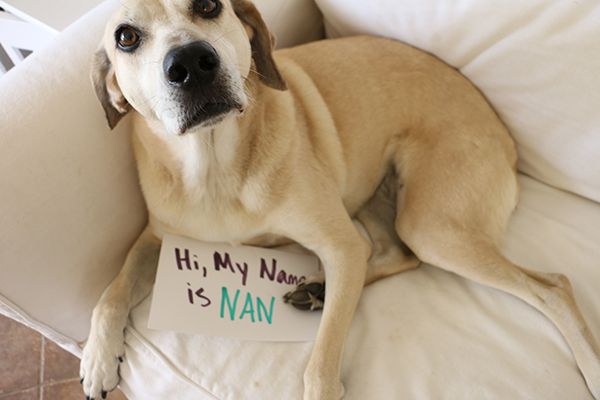
how to choose a name for your pet Next, there’s the inspiration for finding names. Some pet parents look at baby name books for ideas. You can do that as well as:

  • Watching your pet’s personality for a while to see what name fits. It’s okay if your pet doesn’t have a name for a few days. It’s worth the wait to get the right one.
  • See what pets are named on movies and books. This could help you decide what to or what not to name your pet. Consider the popularity of the name Marley after Marley and Me. Many pet owners picked the name because it’s cute and playful; however, many steered away from it because it was so trendy.
  • List names that you have positive associations with. These can come from movies, games, literature, or people or other pets you know that have inspired you.
  • Consider the pet’s origins, too. Jacques might be a perfect name for a French poodle or Wolfgang for a German shepherd. 

What to Do When Naming a Pet as a Family
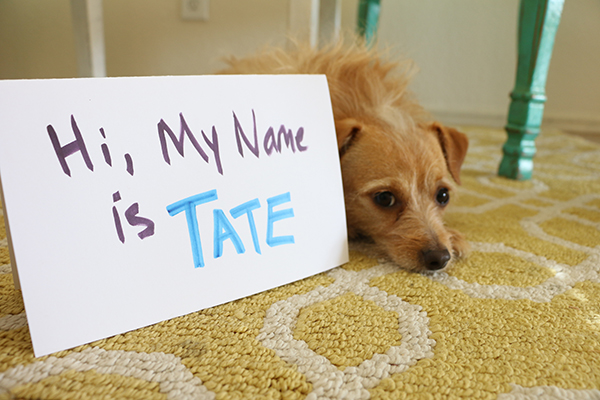
how to choose a name for your pet Sometimes, naming your pet isn’t a one-person job, and everyone in the family gets to weigh in. This is a great chance for everyone to get to know the new family member and for everyone in the family to feel like their opinions are of equal importance. However, it’s important to set ground rules. For example, if you’d rather not use adjectives as names (Shorty, Fuzzy, etc.), then make sure everyone knows that. If choosing as a family, to make it fair, either have everyone vote for their favorite name or draw one out of a fishbowl.

Testing Your Pet’s Name
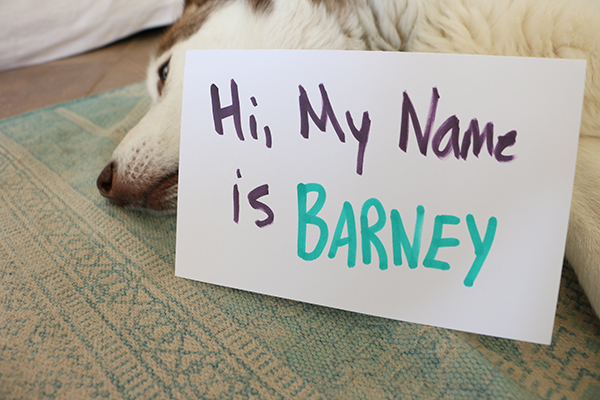
how to choose a name for your pet After you select a name or while you’re still considering one, test it on the pet. Practice calling your new cat or dog by the top name(s). As you do this, you might find that you prefer to use a nickname for that name (ex: Wolf instead of Wolfgang). 
Above all, have fun with naming your pet. The right name will click into place just as your new pet will in your life.
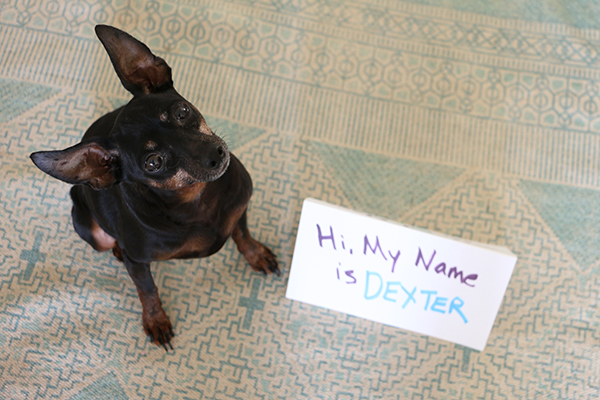
how to choose a name for your pet Picking the right name for your pet is important just as picking the right food. Wellness Pet Food’s recipes are carefully created with all-natural ingredients by pet professionals who are dedicated to your pet having a long, happy, healthy life.
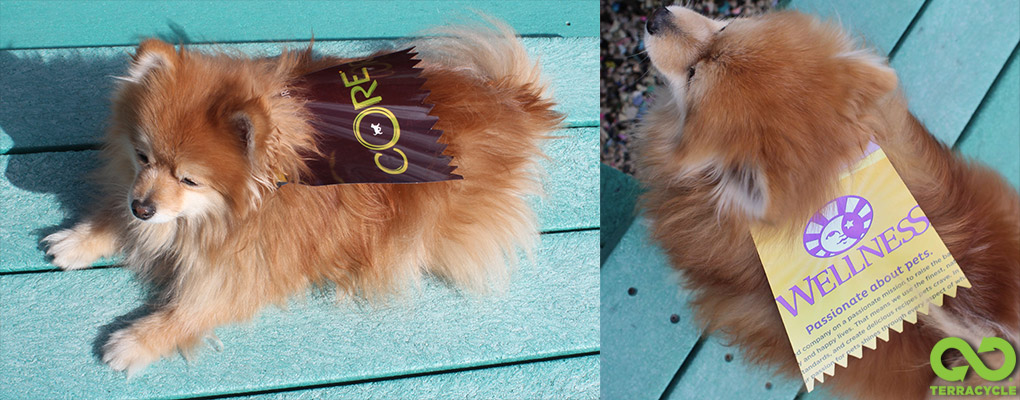
3 Easy DIY Pet Accessories with Wellness Natural Pet Food Packaging

This article was originally published on 4/13/2016.

Are you an eco-minded pet parent? Get creative with one of these fun and easy DIY pet accessories, brought to you exclusively by recycling leader, TerraCycle! If crafting isn’t your thing, you can still do your part to support the environment.

As the first US-based pet food brand to partner with TerraCycle, Wellness pet parents can recycle their pets favorite Wellness recipes for free, including our Wellness Complete Health dry recipes, Wellness CORE dry recipes and Wellness TruFood dry recipes for  both dogs and cats. Sign up here to get started, and you’ll begin accumulating points for all you recycle–points that can be used to support your favorite non-profits!

Easy DIY Pet Accessories

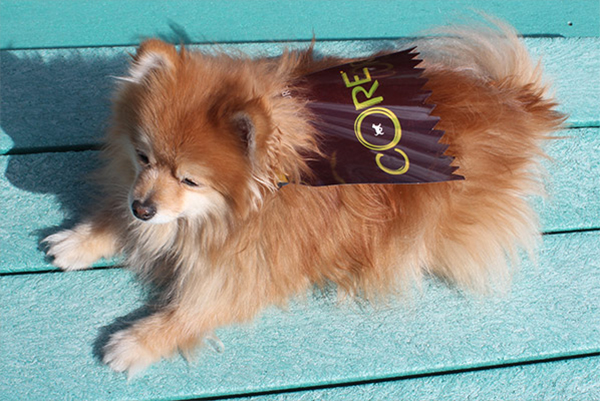
DIY Pet Cape Costume

1. Wellness Dog Cape

What You’ll Need

  • Wellpet Dog Food
  • Bagclear packing tape
  • ¼” flat elastic

Tools:

  • ruler
  • scissors
  • pen

Instructions:

1. Start with a clean pet food bag, and cut the edges off.

2. Use your rule to draw a trapezoid that is 6” wide at the bottom, 4” wide at the top, and 7.5” tall.

3. Fold over the narrow end, about .75”

4. Use a length of tape to keep the fold closed.

5. Cut a 17.5” strip of elastic.

6. Loop it through the fold on the cape.

7. Tie and adjust accordingly so it fits your pet!

Design Tip: Cut the bottom in a funky pattern!  Try a zig-zag or wavy shape!Endling line:  Super dogs super upcycle!

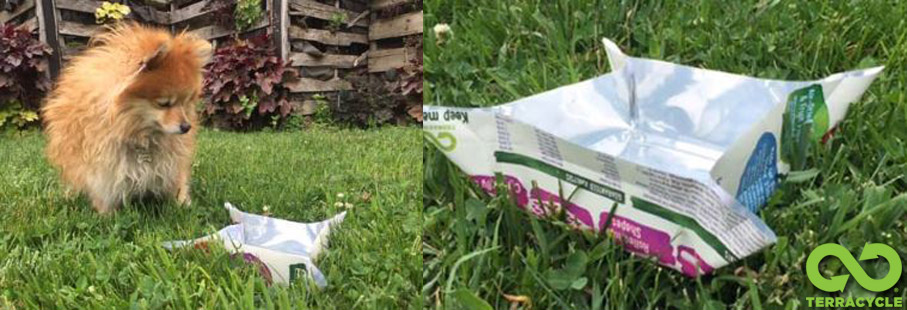
2. Collapsible Pet Water Bowl

DIY Pet Food Water Bowl

​​​​Materials:

  • Wellness Pet Food Bag
  • 4 velcro tabs
  • clear tape

Tools:

  • ruler
  • pen or marker
  • scissor

Instructions:

1. Start with a clean pet food bag. Flatten out the package and measure the width. Measure and mark lines on both ends to make the length of the wrapper the same size as the width. A 10” square or smaller will probably work best. Cut along your marked lines.
2. Mark a border 2” from the edge along each side of the square. Fold and crease firmly along this line. Unfold and flatten it.

3. Fold up two sides at one corner of the square. Make a diagonal crease from the corner to the folded border creating an upright triangle. Repeat this for all corners, then unfold them. 4. Take the Velcro tabs, unfasten them, and stick each one on either side of the corner of the square, one per triangle. Make sure that they will line up when fastened. 5. Fold up the bowl at the corners and press the hook and loop fasteners together. You are ready to dish up your pet’s favorite snack in your new bowl!

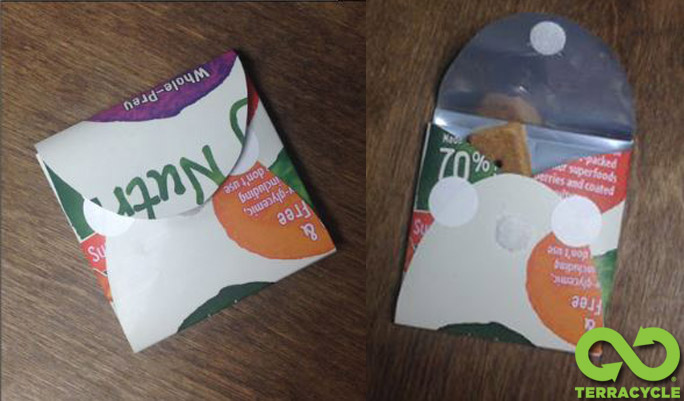
3. Pet Treat Holder

DIY Pet Treat Holder

Materials:

  • empty dog food bag
  • ruler
  • washable marker

Tools:

  • scissors
  • tape
  • 1 self-adhesive Velcro® fastener

Instructions:

1. Start with a clean, empty dog food bag. Cut a square that is 7 ½ inches on each side. Centered inside the square, draw a smaller square that is three inches on each side. This smaller square will be 2 ¼ inches from all edges.

2. On the top edge of the smaller square, draw a semicircle that hits the top of the large square and starts and ends at opposite corners of the small square. Repeat for the other three sides. Cut around these lines.

Pro tip: To give your treat pouch dimension, make an extra ¼ inch fold at the base of each semicircle.

3. Along the lines of the small square, fold all four semicircles towards the center.

Your piece should fold up to the size of the small square. Tape the bottom flap and two side flaps in place.

4. Attach one side of the self-adhesive Velcro® fastener on the inside of the top flap. Then, fold down the flap so the other side of the self-adhesive Velcro® fastener attaches to the outside of the bottom flap. Let the Velcro® fastener stick where it naturally landed after you folded the top flap down.

Fill your new treat pouch with your favorite treats for your favorite pet!

10 Steps for Choosing the Right Shelter Cat for You

The decision to get a shelter cat is exciting but it can also seem overwhelming. It’s a wonderful feeling to know you’ll be providing a forever home, but you may also be concerned with how to pick the right cat. Being impulsive when it comes to choosing a shelter cat may work out but to increase the chances of being the right home for the right cat, my recommendation is to be well-prepared. Here are my 10 tips.

1. Should You Get a Kitten or Adult Cat?

There are advantages to both but it’s important to look at the time you can take for training. A kitten will require more supervision and training. The house will may also need to be kitten-proofed as an inquisitive young kitten will want to explore just about everything. If you’re hoping for a cat with a certain temperament, then an adult cat may be the best choice.

2. Evaluate Your Home Environment

What is your family life like? Is it chaotic and busy or relaxed and calm? If your family life is very busy, think about whether you’d have time for the addition of a cat. Do you have children in the home? What are their expectations? If your children are very young, a kitten may not be the best choice because they are easily injured. Do you live alone and spend little time at home? Consider adopting two cats so they can keep each other company. You may find a pair of cats at the shelter who are already bonded.

3. Think About the Relationship You Want

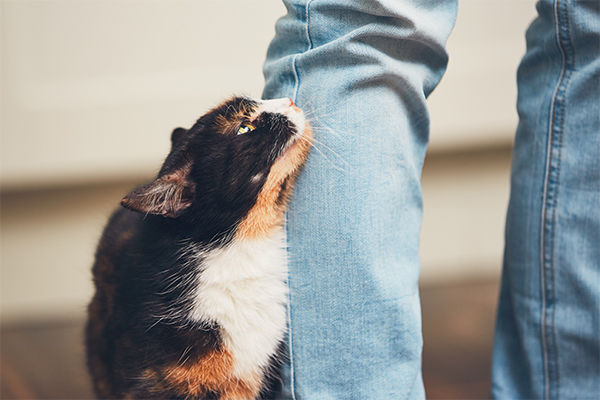
cat snuggling person
Before going to the shelter, take time to think about what type of relationship you want with a cat. Are you looking for a cuddly lap cat who is quiet, or an active cat who will keep you on your toes? If you choose a long-haired cat will you have the time to do daily brushing? Are you looking for a cat who will sleep in bed with you or one who keeps a distance? To prevent disappointment for both you and your new cat, think about your relationship expectations.

4. Do You Already Have Pets at Home?

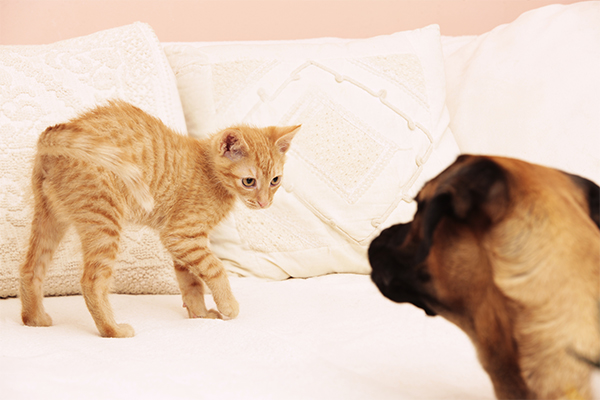
cat meeting dog
Be mindful of the furry family you already have. If you currently have a cat at home, try to match complementary personalities when choosing a second cat and be prepared to do a gradual introduction. If you have a dog at home, try to choose a shelter cat who has previous (and positive) experience with dogs.

5. Talk with Shelter Personnel

They can help you narrow down your search for the right cat. Don’t take offense at questions they ask because they’re intended to ensure a good match.

6. Do a Walk-Through and Look at the Cats Before Settling on One

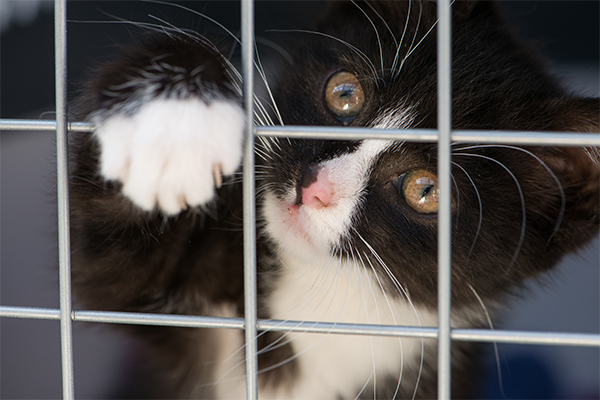
shelter cat
Trust me, it can be so easy to fall in the love with the very first cat you see, but take a moment and do a general walk-through. That way, you may find a couple of cats with whom you’d like to spend more time. If you just stop at the first cage, you may miss that amazing feline love of your life in the last cage on the other end of the room.

7. Spend One-on-One Time

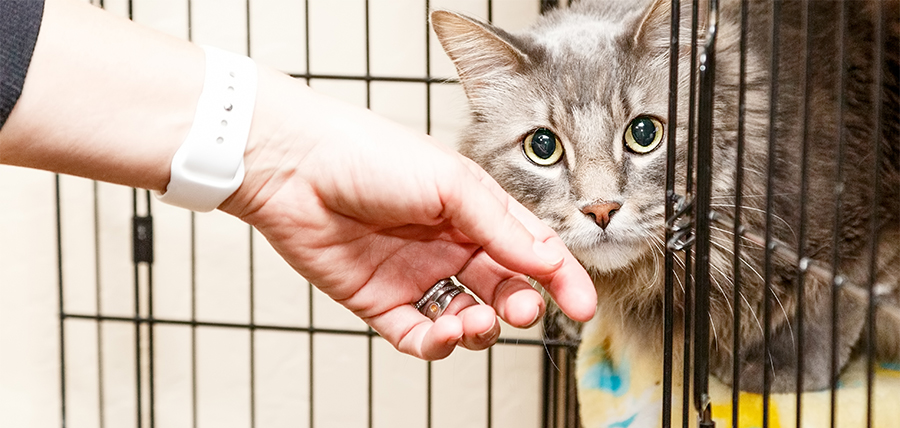
Once you see a cat who touches your heart, spend some one-on-one time together. Most shelters have “get acquainted” rooms where you spend quiet time. This is the time to see how you both react to each other. Are you able to pet the cat? Does the cat like being held? How does the cat respond when you extend your hand? Remember, the cat may be frightened and the personality you see at the moment may not reflect how the cat will be in a home environment without all the shelter stress. What matters now is whether you feel a connection. Let the cat come to you. Take the time needed for the cat to feel secure enough to come toward you, even just a few steps. 

8. Coming Home

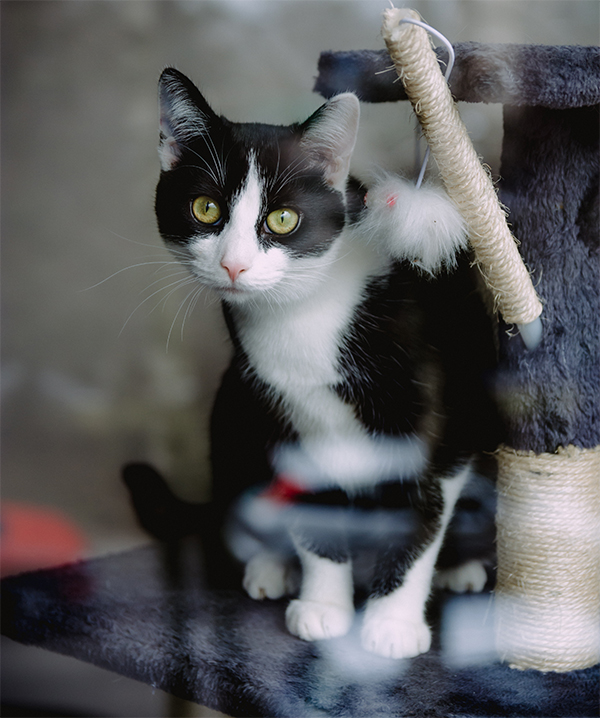
cat with scratching post

Photo by Paweł Adamczak on Unsplash

Have a room set up for the newest feline family member. This room should have a litter box, scratching post, toys, feeding station, and places to hide. Even though you know you’re providing a wonderful new home for the cat, it may take time for the newcomer to get familiar. Coming from the shelter environment to a totally unfamiliar place can be overwhelming. Provide one room so the cat can get comfortable with the new smells, sights and sounds. Don’t ask your new cat to get to know an entire new home or apartment all at once.

9. Get to Know Each Other

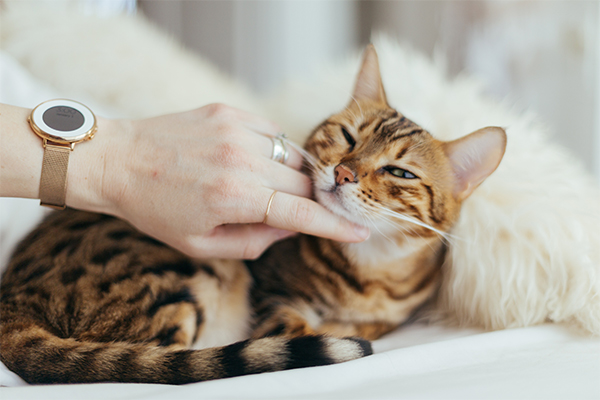
cat snuggling with person

Photo by Paul Hanaoka on Unsplash

If your new cat is timid or overwhelmed, let him get to know you before you introduce other family members. Let the cat set the pace of how much interaction he wants. Trust-building is important and it happens by letting your new cat take the initiative. If he’s scared, provide some hiding places for him by scattering open paper bags or boxes in the room. This way, he can feel somewhat invisible which will lower his stress level. Trust-building may take time or you may have adopted a cat who is ready to investigate his new home the moment you walk in the door. What’s important is that you let the cat set the pace.

10. Be Patient and Ask for Help if Needed


If you adopted an adult cat, keep in mind that he comes with a history. It may take him a little time to shake off his past or his stress from shelter life. Don’t expect your new cat to be the perfect feline companion 24 hours after coming home. If you have questions or concerns, stay in touch with the shelter because in most cases, the personnel are more familiar with the cat and can help guide you through any early rough patches. 
Be patient, train with love and continue to build his trust. The time you spend now to help him feel secure, safe and loved, will pay off as you watch your newest family member blossom.

How to Honor Your Pet on World Pet Memorial Day

World Pet Memorial Day is on June 9 and is a time for pet owners who have lost a beloved pet to remember, to honor, to celebrate and to reflect on the life of a departed pet.

Honoring Your Pet Online

Social media is one of the most popular ways to honor one’s pet on World Pet Memorial Day. Here are some things you can do.

  • Post a favorite picture or series of pictures of your pet on social media.
  • Consider making a photo album of your pet starting from the time he was small or from when your journey together began.
  • Share stories about your pet on social media or on your website. A favorite moment or experience is a great way to remember the love you shared with a pet who has passed.
  • Create a website for your pet. This is a place for you to share pictures, quotes, videos, and longer stories about your pet. Not only does creating a designated page for your pet give you more quality time reflecting on your life together but reading it also could help other pet owners who’ve lost pets.

To help others find your online tributes, make sure to use the hashtag #worldpetmemorialday, so other pet lovers and mourners can share in the joy your pet brought and in your shared grief. You can also create a unique hashtag for your pet.

Special Ways to Memorialize Your Pet

In addition to honoring your pet online, there are many special things you can do to create permanent reminders of your pet.

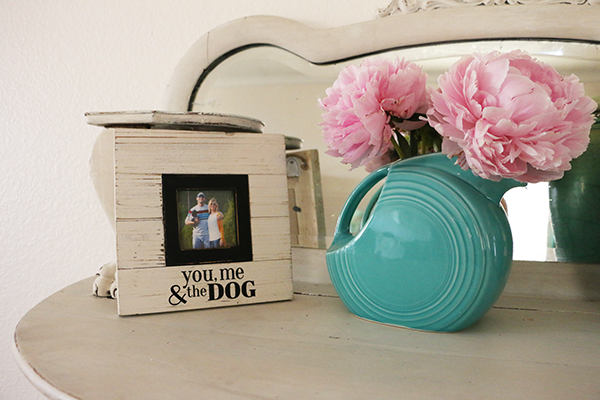
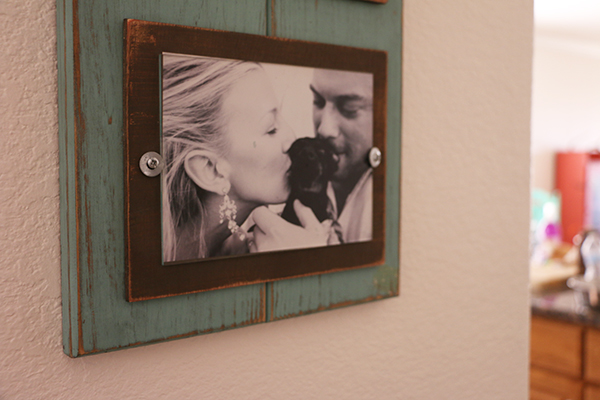
  • Print photos of your pet for you to hang on the walls of your home or to put on your desk at work. Seeing the image on a regular basis will bring back fond memories of the happy times you and your pet had together.
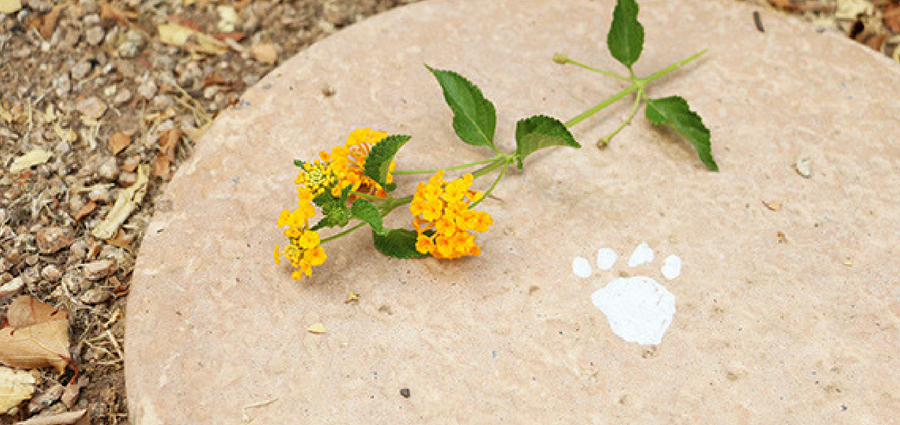
  • Get crafty be creating a memorial stone for your garden or walkway. The stone could be painted or could have your pet’s name or image carved into it. Every time you see the stone, you’ll have a beautiful reminder of your pet.
  • Plant a bush, flower, or tree in honor of your pet. Just as your pet had a positive impact on your life, so will a plant on the environment.
  • Make a donation to a cause that your pet led to you. This could be a variety of things from donating to the shelter where you got your pet to donating to a research center that cures pets of ailments your pet may have suffered from. You can also consider volunteering or donating to the park where you used to take your pet.

Taking Time to Remember Your Pet

Whatever you decide to do on World Pet Memorial Day, remember to take time. No matter how much time has passed since you lost your pet, you still have strong feelings that you deserve to take time to feel. Take a walk where you used to walk your pet or sit on a park bench where you used to watch your pet play and think about those special times. Reflect on the wonderful moments that you had and help yourself find peace in knowing how much you and your pet brought to one another’s lives.

When you lose a pet, take care of yourself and allow yourself to grieve and honor your dearly departed loved one. Wellness Pet Food believes in the best physical, mental and emotional health for pets and pet owners. For those who have lost pets, we are sorry for your loss.

America’s Most Pet Friendly Companies of 2018

Our second annual list of pet-friendly companies—created in celebration of Take Your Dog to Work Day®—includes breweries, dating services and more!

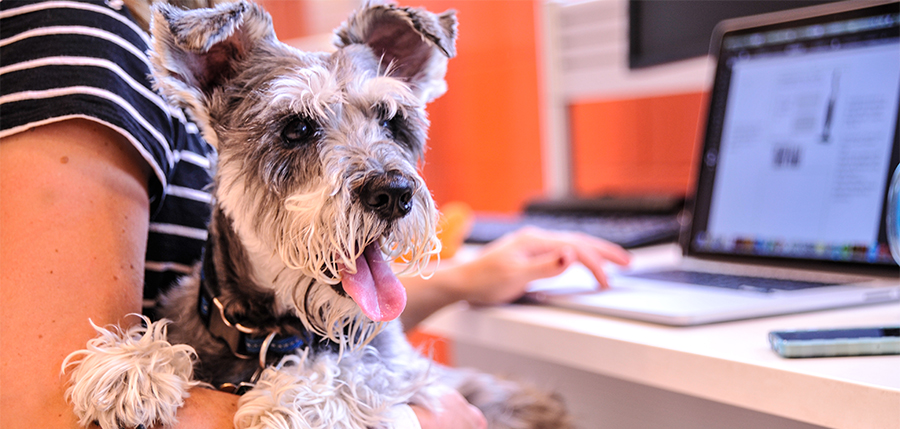
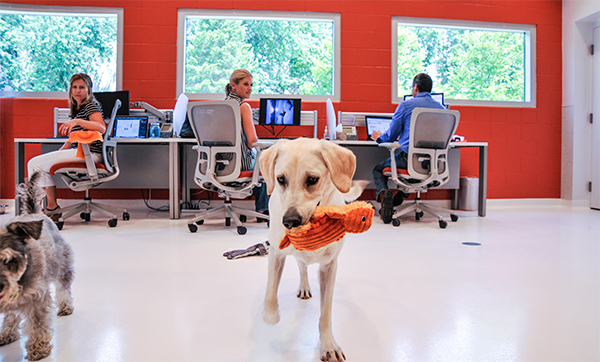
While we celebrate the event each year at our Tewksbury, MA offices—complete with dog grooming and massages, a biscuit bar, raffles, a jumpy house, K9 officer demo and more—we wanted to roll out the red carpet for other companies with a similar passion for pets.

America’s Most Pet Friendly Companies of 2018 include:

1. Tito’s Handmade Vodka (Austin, TX)

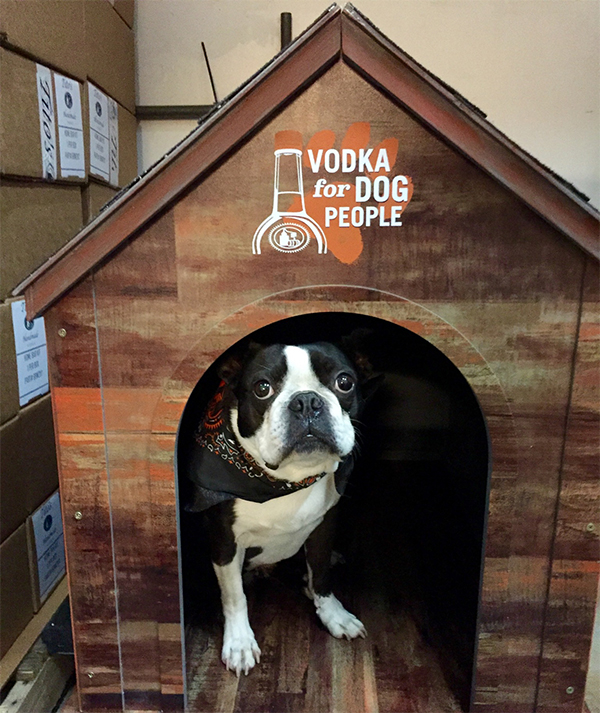
In addition to allowing dogs in the office each day, Tito’s goes above and beyond for pets in need. During the early years of the company, Tito’s Handmade Vodka took in abandoned animals that wandered around its distillery. As the company grew, so did its desire to help the community with the launch of its Vodka For Dog People program. The program works alongside animal charities to help save the lives of hundreds of animals.

2. Petcube (San Francisco, CA)

Not only is its office pet-friendly, many of Petcube’s events and corporate functions are as well! Employees enjoy perks like dog walking and pet sitting, pet insurance, on-demand vet consultations and more through their Petcube Care membership program. Best of all, employees get early access to cutting-edge pet technology products and services that the company is developing. 

3. Harpoon Brewery (Boston, MA)

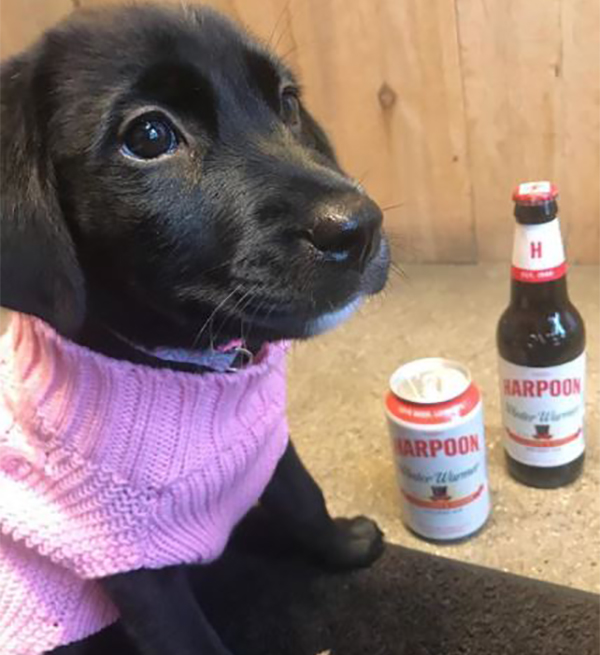
Harpoon Brewery’s CEO, Dan Kenary, is a dog lover who decided to bring that passion to the workplace by allowing dogs in their office every day. Many employees’ dogs frequently visit the Boston and Windsor (NH) Breweries as well.

4. BISSELL Homecare (Grand Rapid, MI)

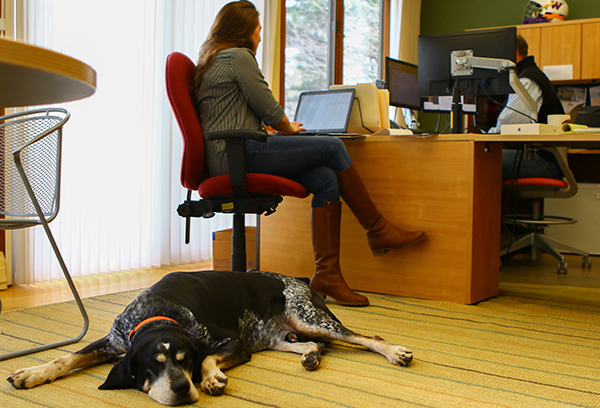
Bissell knows that allowing pets in a workplace can reduce stress and lift spirits, and its annual employee survey indicates that being able to bring their pets to work is a top reason why employees love working there. Their office has Pet Spot, an area designed specifically for pets with dog treats, water bowls, doggy cleanup kits, walking paths as well as occasional special treats, like doggy ice cream. Bissell also infuses its love for pets into its BISSELL Pet Foundation that offers various fun pet-focused products.

5. Glassdoor (Mill Valley, CA)

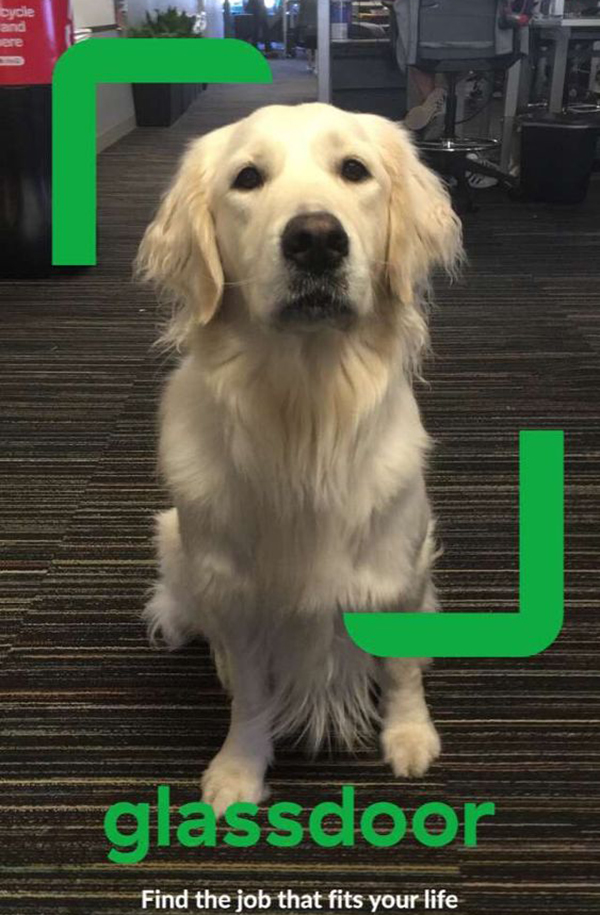
Glassdoor has nearly 30 dogs in its headquarters every day. Knowing that a dog-friendly space allows employees to bring their whole selves to work, the company has had a dog-friendly workplace since 2013 and works to help jobseekers find pet friendly workplaces through its website. The office also has designated areas for those who have allergies to keep everyone safe and comfortable. 

6. Zoosk (San Francisco, CA)

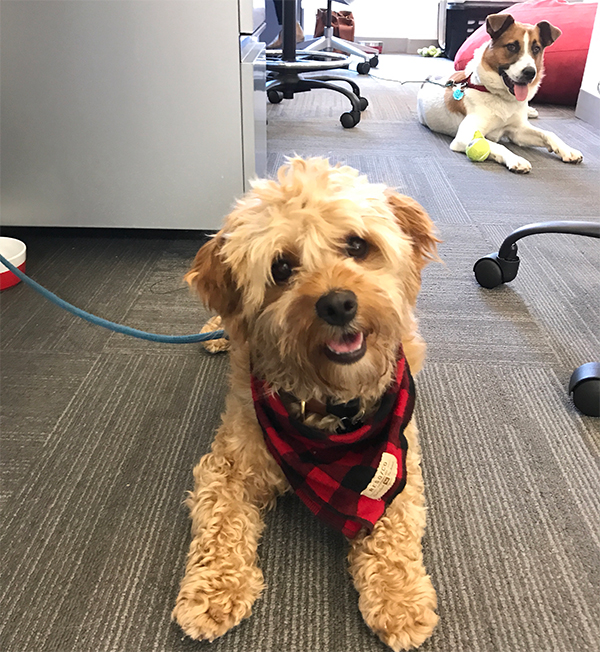
While the online dating service helps men and women find relationships, Zoosk understands the importance of the relationship between pet parents and their fluffy friends. It welcomes dogs on a daily basis and recognizes a pup per month with a special award. Zoosk thinks the best way for employees to alleviate a “ruff” day is to take a break and play fetch with one of the many Zoosk doggies on staff.

7. Zogics (Lenox, MA)

As one of the country’s largest suppliers to the health and fitness market, Zogics cares as much about their pets’ health as it does humans! Headquartered in the Berkshires surrounded by acres of outdoor space and 15 miles of dog-friendly trails, a day at its office is pooch paradise. Its “Pawternity” policy gives new pet parents an extra week of PTO, a pet store gift card, and a lifetime supply of Zogics Pet Shampoo. Their pets are also an integral part of their work—which includes an internal Slack channel devoted to pets. 

8. O.H.S.O. Brewery, Distillery and Restaurant (Phoenix, AZ)

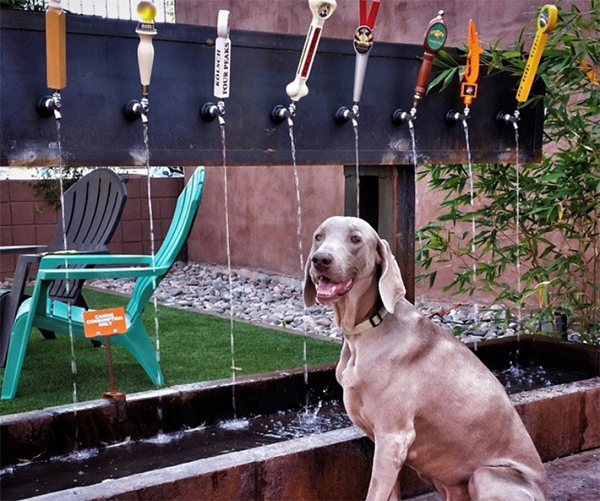
All of its brewery locations have dog-friendly patios and walls filled with images of guest and employees’ dogs. It also offers complimentary homemade dog treats, a burger for dogs, and “barking bars” with taps that pour water for doggy water bowls. The company also hosts monthly giveback nights where 20 percent of sales go to local animal shelters and adoption events.

9. Fueled (New York, NY)

To make the office as comfortable as possible and add an irreplaceable sense of warmth and joy to its work environment that only pups can bring, Fueled allows dogs in its office every day. It even has a company dog mascot that has worked alongside employees for years, a Brussels Griffon named Frasier. Employees can’t imagine their office without him! 

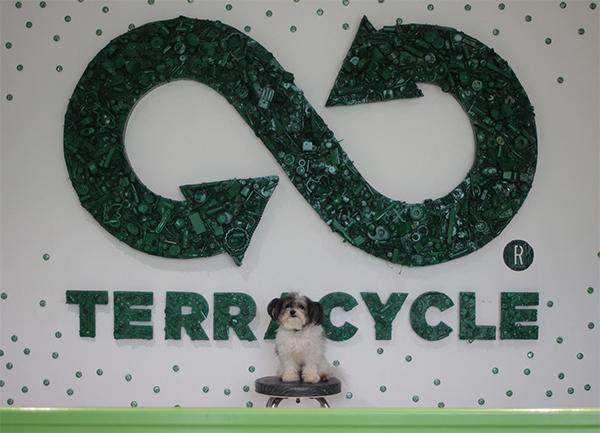
10. TerraCycle (Trenton, NJ)

TerraCycle welcomes dogs in its office, with designated conference rooms and outdoor spaces for the office pups. The innovative recycling company is also committed to sustainability in the pet industry, supporting recycling efforts of empty packaging to help minimize the footprint the pet industry leaves behind. In 2015, Wellness Natural Pet Food became the first US-based pet food brand to partner with TerraCycle to provide consumers a free method for recycling their pet food packaging. Consumers can sign up to recycle their Wellness packaging here.


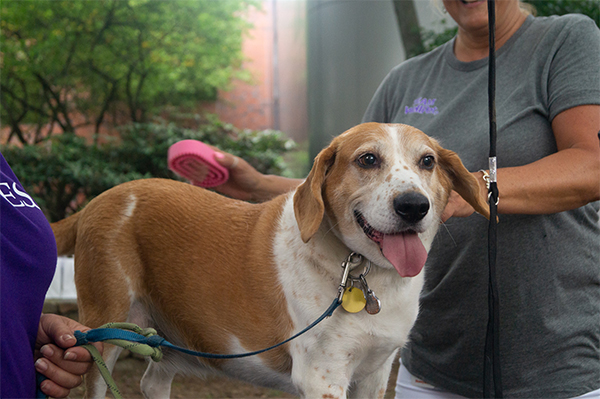
Here, beagle, Harley, gets a free grooming session during Wellness Natural Pet Food’s 2017 annual Take Your Dog to Work Day® celebration.


Becoming a First Time Pet Parent

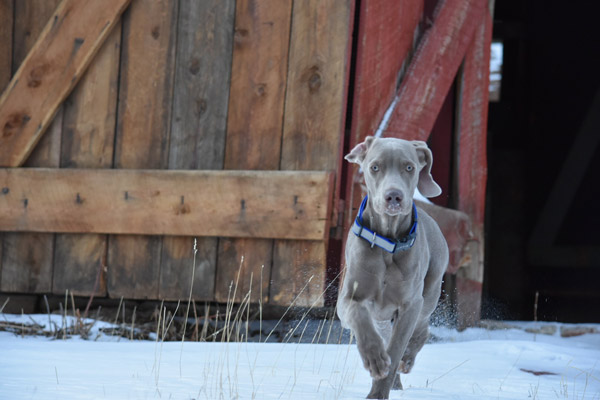
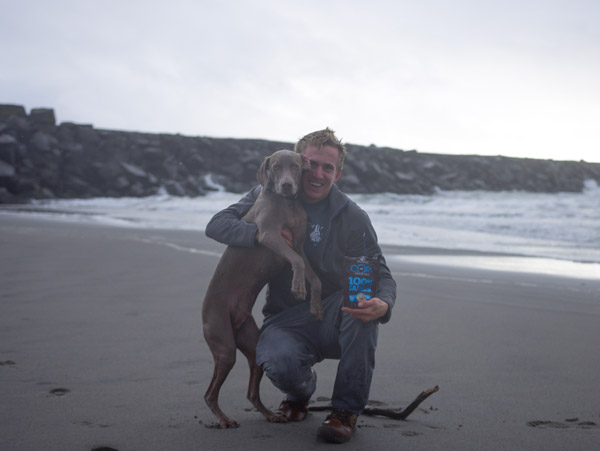
I’ve grown up with dogs my whole life, and I knew that one of the first things I was going to do once I was on my own was get a puppy. However, the thought of having this overwhelming responsibility was definitely daunting, and I wasn’t sure if it was the right time to bring a puppy into my life. A few days later, Koda, a blue eyed Weimaraner came into my life, and our adventure began. 
The first thing I learned as a new pet parent was that there’s never going to be a “right” time to get your first dog, and that those first few months are something you’ll never regret or forget. There was a steep learning curve and I found myself scouring blogs just like the Live Well blog by Wellness Pet Food, trying to learn as much as I could about food, vaccines, exercise, and training so I could properly take care of my new best friend. 

I’ll be the first to admit, my situation is pretty unique. As a professional athlete, I’m home from practice by lunch time most days which allows Koda and I to explore every afternoon, and living in the Pacific Northwest caters to our need for adventure. In his first year Koda’s been to five national parks, visited six states, ran in the Pacific Ocean, camped atop several mountains, and has probably chewed over 1,000 sticks. My schedule also allowed me to spend a lot of time bonding with Koda right from the start. He’s well trained and we’re totally inseparable – which means he has a bit of separation anxiety whenever I leave him for work road trips. However, the rest of the time our close bond makes it great because I don’t have to worry about him during our adventures.

The second thing I learned is that some words are sacred – ball, stick, smell, snack, friends, etc. Dogs are smart and Koda knows when I say “friends” that he gets to go to the dog park to play. I’m sure most dog owners have their own list of words and they understand the struggle of not accidentally using those scared words.

I also learned that no matter how tiring and frustrating it can be having a puppy, your dog will love you unconditionally and that alone makes it all worth it. Koda has done more than his fair share of testing my patience in our first year together. Although he knows better, he still can’t resist getting into the garbage when he smells bacon, he’s eaten an entire roast right off the counter, and he even chewed up our blinds so that he can look outside. But even through all of that, he’s my best friend and I can’t picture my life without him by my side. 

If you’re trying to decide whether or not you should get a dog, my advice is to just do it. You won’t regret it for a second. Your new companion will be by your side through everything and love you unconditionally.

How to Get Involved with Your Local Animal Shelter

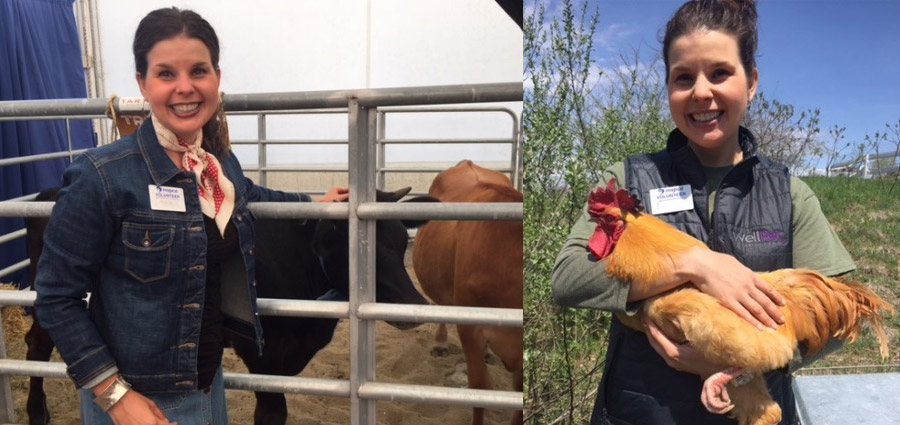
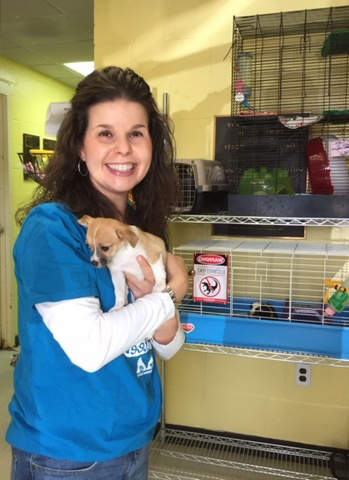
Alicia is responsible for front office operations at WellPet, ensuring excellent customer service to visitors and employees, and is a corporate culture advocate. Here, she talks about her passion for volunteering at pet rescues and shares some helpful tips for those who are interested in helping animals but might not know where to start.

Why do I volunteer?

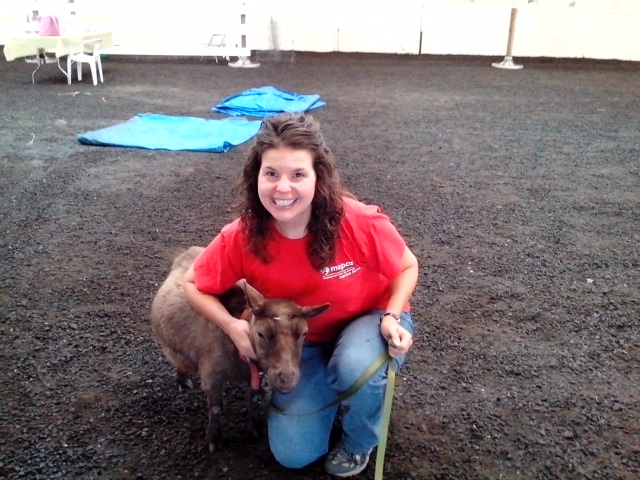
 Growing up, my family frequented the MSPCA at Nevins Farm in Methuen, MA to make donations of treats and newspapers – with the added benefit of being able to cuddle the animals available for adoption.  For a place that provided me with such joy, it only made sense for me to give back to their shelter.  I now volunteer at 3 local shelters (MSPCA at Nevins Farm, Salem Animal Rescue League and Lowell Humane Society) that provide a welcoming environment to small and large animals alike while they are waiting to find their forever home.    

alicia with puppy

What I do:

I am part of the outreach teams at these three shelters and assist at on-site and community events.  Goals of the outreach teams are to educate the public about the shelters, raise much-needed funds, and to find homes for the animals.   It always brings me happiness to watch someone interact with an animal for the first time and to see them leave the shelter with a new family member. There tends to be a stigma that an animal at a shelter has something “wrong” with it, but there are many reasons why an animal is placed at a shelter including the owner’s financial issues, a change in family dynamics, or a move that doesn’t allow pets.

alicia with goat

How do you get involved?

Most shelters are actively looking for volunteers! Help is always needed for a wide-range of tasks. From doing laundry to caring for barn animals – the shelter teams are willing to invest the time in properly training volunteers at any skill level.  Volunteers usually go through an application background check, attend orientation and then begin training from a mentor at the facility. There’s generally an age requirement for certain tasks, but most shelters will welcome any assistance you can provide. One misconception is that you need abundant free time to volunteer – but shelters are generally willing to work with your schedule and availability to find a fit that works for you. Many shelters offer children’s programming as an introduction of how to care for the animals and fundraising opportunities.

WellPet works closely with many animal rescue and shelters throughout the United States. We encourage you to reach out to your local facilities that are looking for volunteers. 

How Pet Ownership Teaches Kids Responsibility

National Kids and Pets Day is on April 26th. It’s both a day to celebrate the bond children and pets share but also a day to remember safety where our pets and children are concerned. 

It is important to remember that small children as well as pets may not know their limitations and should not be left alone. Supervision is essential to prevent injury. 


Check out our 5 tips on how pets can teach responsibility: 


1. Chores teach responsibility. Giving your children age appropriate tasks for your four legged family member helps build their self-confidence and is a perfect opportunity to reinforce their independence.  As parents, we know enthusiasm can dwindle when it comes to any chore so don’t be afraid to pull out the sticker chart to help!  

joaquin walk

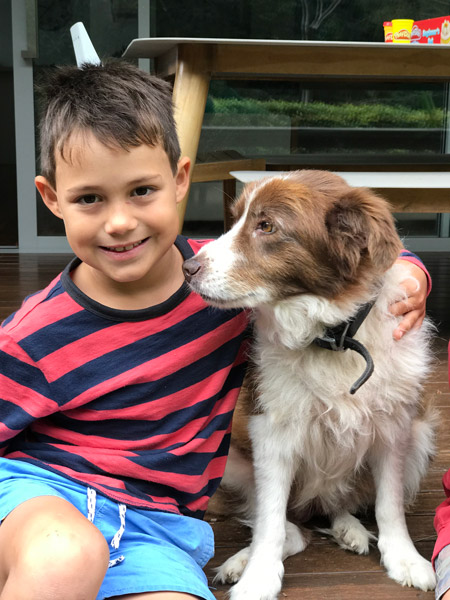
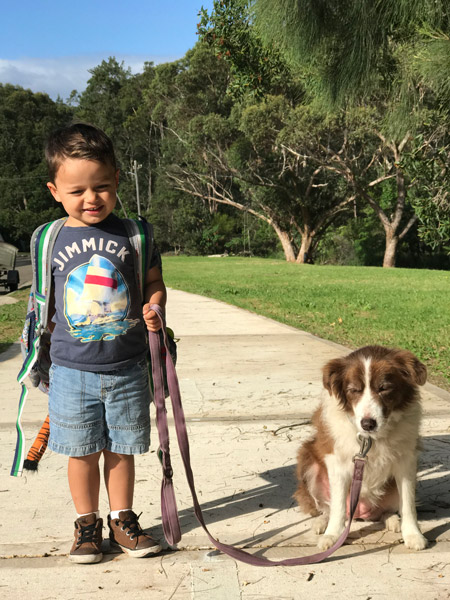
2. Live an active life. Walking a dog is a fabulous hands-on experience for kids who love pets. With parental accompaniment to ensure their safety, a daily walk can be a rewarding time together with the added benefit of getting some fresh air and exercise for the whole family.
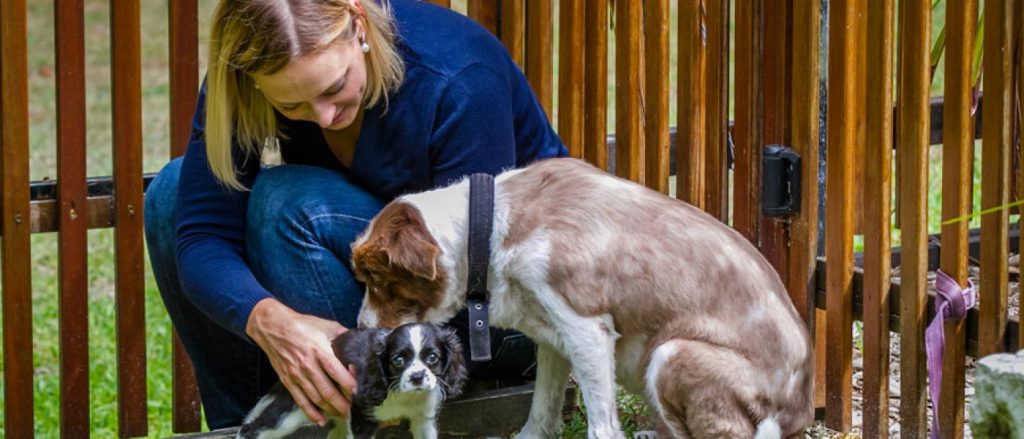
3. Companionship beyond the physical. Pets can fulfill so many psychological needs for children. The unconditional love and affection that pets give children not only boosts their self-esteem but it also helps them make emotional connections of their own. Studies of school-age children in fact have shown those with a pet, tended to be more empathetic and altruistic than those children without a pet, making dogs the perfect teachers of kindness.

Federico

4. Understanding the world. Having children care for pets provides the opportunity to discuss emotions that children often struggle to understand such as growth, accidents and death. Children often surprise us with their resilience but for most kids, the loss of a pet is often their first encounter with death and can be a devastating heartache. Discussing these moments with them helps them not only process the grief but also teaches them emotional skills far greater than their age.   

5. Teaching dog safety. Pets are treasured members of our families and having a pet can teach a child respect by knowing how to treat their own dog and with parental help, this can then be further built on to ensure kids on how to approach strange dogs safely, read their body language and how to behave around pets to ensure safety at all times. 

Alejandro Vet

Help kids and pets learn to be good partners to each other. Use #NationalKidsAndPetsDay and #WellnessPetFood to post on your social media.

5 Ways to Celebrate Earth Day with Your Pets

 Earth Day Tips provided by Wellness Natural Pet Food Partner, TerraCycle.TerraCycle is an innovative recycling company that has become a global leader in recycling hard-to-recycle waste. Wellness Natural Pet Food is the first U.S.-based pet food brand to make its packaging nationally recyclable through a partnership with TerraCycle. So far, the partnership has resulted in 70,000 pet food bags diverted from landfills.

Each year on April 22 the world celebrates Earth Day, a tradition started in 1970 to honor the Earth. During this annual event, people plant trees, take nature walks, host and attend festivals and partake in other activities geared towards raising awareness and support for environmental protection. 

For pet owners, making an effort to improve the health of the earth on this day (and year-round) is easier than ever. 

Here are five ways pet-owners can not only reduce their impacts, but make a positive contribution this Earth Day, and beyond.

Choose biodegradable waste bags:

If you take your pet for a walk (and you’re a responsible pet owner), it is likely that you are carrying a roll of ‘baggies’ to curb your pet and properly dispose of their waste. While your neighbors applaud you, these plastic bags contribute to landfills and take around 400 years to break down. Thankfully, biodegradable and compostable versions of these bags are now available at most grocery and pet stores.

Recycle pet food containers:

People-food packaging will sometimes bear information on their label signifying whether or not it can be recycled curbside; many pet food containers have this messaging, as well. When possible, buy pet food packaged in containers that can be recycled. Aluminum cans and rigid plastic containers are recyclable through many curbside programs, and all Wellness dry food flexible plastic packaging  can be easily recycled through its free TerraCycle program.  

Donate to shelters:

Do you have old towels, sheets, pillows and cases, or worn-out clothes you’ve been meaning to get rid of? There are millions of shelter pets around the country that could use these items in their kennels. Plus, many pet shelters and adoption centers are non-profit and appreciate these donations to help clean and care for the animals. It’s a win-win: you keep these items out of landfills and make someone’s future buddy’s day.

Plant a plant:

Many people celebrate Earth Day by planting a tree. Carry on this tradition by planting pet-friendly plants in your yard. Perhaps your cat would like a catnip plant. Parsley is great for dogs (and humans!) to eat, as are carrots. If space is limited (or you just prefer the ready-made variety), check out Wellness Treats that have these same natural ingredients. 

Get out in nature:

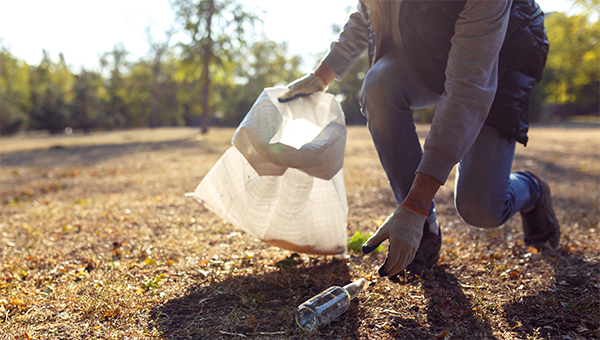
The easiest way to commemorate Earth Day? Just get out in nature, and take your furry companions with you! Skip the car ride (and carbon emissions) by leashing up. And while you’re out there in the fresh air, make a special effort to clean up while you’re visiting. Heading to the beach or woods? Pick up trash you see on the trail. It only takes a few extra moments to do this kind of good deed for the Earth, and you might be surprised to find that others might see your efforts and be inspired to do a cleanup of their own.

DIY: What Every Pet First Aid Kit Needs to Have

diy pet first aid kit blog cover photo

Pet first aid kits are essential for every pet owner to have. Access to the right supplies when a crisis strikes can save your pet’s life. Learn what a pet first aid kit is, why you should have one, and where you should keep it.
What Is a Pet First Aid Kit?

A pet first aid kit is a collection of materials useful in a medical emergency. These resources are helpful for minimizing the effects of an incident before you seek professional medical help from your veterinarian or emergency vet.

What Your Pet First Aid Kit Should Have in It & How to DIY a Pet First Aid Kit

While pet first aid kits come pre-assembled, the benefit of building your own is that you know exactly what is in it and where the items are.

You can easily create a DIY pet first aid kit

Step 1: Gather the materials every pet first aid kit needs.
  • Paperwork & records such as your pet’s ID card with your name and address, the veterinarian’s number, the emergency vet clinic’s number, and the number for animal poison control (888-426-4435), a copy of your pet’s medical history, and list of vaccinations with dates
  • Remedies such as medications, flea treatments, sterile saline eye wash, dish soap for removing toxins from the skin and fur, milk of magnesia for absorbing poison, and hydrogen peroxide (3%) to induce vomiting (note to contact the vet or poison control center before inducing vomiting or administering treatment for poisoning with milk of magnesia)

diy pet first aid kit

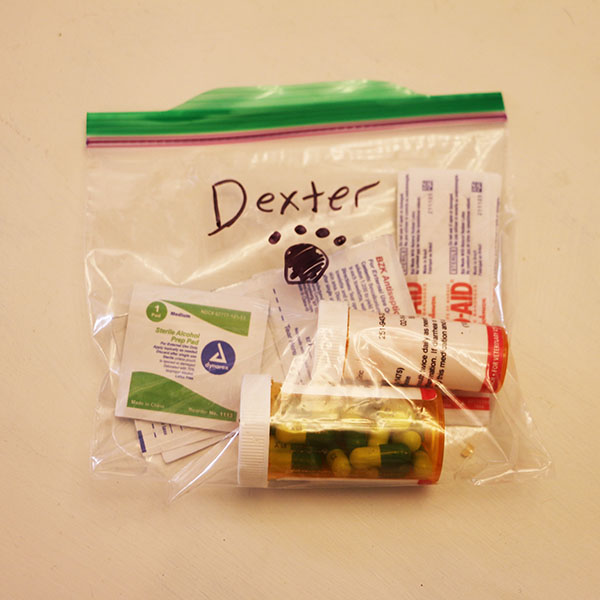
  • Wound supplies like wound spray, Q-tips, gauze bandage, nonstick bandages, adhesive tape for bandages, wipes, and a Ziploc bag
  • Tools like a flashlight and tweezers, an emergency muzzle (nylon hosiery works well), a nylon leash, eye dropper for flushing wounds or giving oral medication, digital thermometer, and scissors for cutting tape
  • It also doesn’t hurt to have treats on hand or as part of the kit to soothe a pet that has been traumatized by a situation that requires emergency medical attention (provided your pet is okay and can eat).

Step 2: Package the materials in an easy-to-grab-and-go clear tackle box.

This enables you to keep the supplies organized, to see what you are out of or are missing, and to get materials faster when you need them.

Step 3: Place labels over each section of the tackle box. 

When there is a crisis, time is often of the essence.

pet getting bandage

Step 4: Store the box in a handy location

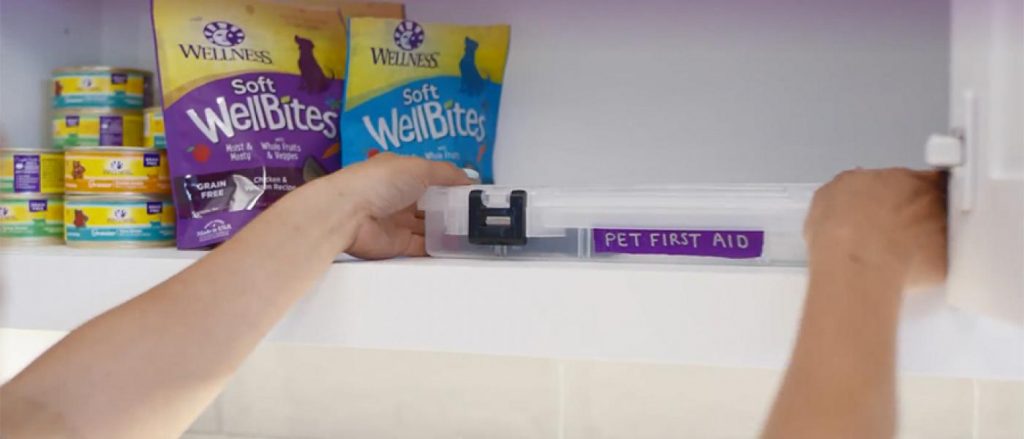
You may choose a cabinet where you keep other pet supplies. It does not hurt to have a separate DIY kit for the car as most materials are low-cost and can—as noted—make a huge difference in an emergency. 

Having the right materials on hand can be the difference between life or death for your pet, so if you don’t already have one, make a pet first aid kit now.

husky dog with bandage on nose
Pet first aid can save animal lives, and so can good nutrition. A balanced diet of natural ingredients like those made at Wellness Pet Food help to ensure a longer, healthier, and happier life for your pet.

About This Page

Date:

05/04/2018

    Be the best pet parent you can be. Join for expert advice.

    Sign Up