



How To Transition From One Kind Of Dry Food To Another

Whenever introducing your cat to a new kibble, it’s a good idea to gradually transition to the new dry food recipe over a 7 – 10 day period.

An extended transition time frame allows acceptance of the new flavor in the food bowl. And, it will also avoid potential stomach upsets that could cause diarrhea as a slow changeover allows the digestive system to adjust to new ingredients.

Add about 10 per cent of the new kibble to the bowl every day. If after a few days, your cat notices the difference and there are signs of resistance, reduce the new food by ten percent, and, if necessary, hold off on the transition for a couple days before trying again. There is no rush! And remember, if you cat is really resistant to a particular new recipe, the unused food, still in the original bag, along with the receipt can be returned to the store where it was purchased for a full refund. All Wellness dry food recipes are covered by this Catisfaction Guarantee.

At the same time you are transitioning the new kibble into the food bowl, consider serving it to her as a treat. It can be as few as five or six kibble. If you feed more than that, remember to make the calorie and amount adjustments to her food bowl so that you are not over-feeding during this transition phase.

Serving the food in the right bowl can help with the transition too. Cats like to eat out of broader, flatter bowls so that their whiskers don’t touch the sides. This is known as whisker stress. Avoid very tiny bowls for both food and water all together.

Always ensure that the food bowls are not placed in a high traffic area. Cats like privacy when they eat and this is important when transitioning over to a new dry food recipe. Also make sure that there is plenty of fresh water available near the kibble bowl as well as in other locations throughout the home. It’s important for a cat to be properly hydrated especially on a dry food diet.

What Is On The Menu
The Wellness Complete Health recipes offer cats a variety of chicken options in a small round kibble that cats of all ages are able to pick up easily, chew and digest. The Adult Chicken Recipe has deboned chicken as the first ingredient with chicken meal and rice.  There is a grain-free option too, ideal for cats with sensitive tummies. The Adult Natural Hairball recipe is made from chicken meal and rice to prevent hairballs from forming and to aid swallowed fur to move smoothly through the digestive system. There is a chicken recipe for kittens as well as a salmon and herring meal recipe suitable for cats with a more sedentary indoor lifestyle to control weight management.

All the ingredients are clearly highlighted on the packaging for easy decision-making.
Similarly, the Wellness Core kibble recipes offer an indoor-weight management formula made from chicken with turkey and chicken meal as key ingredients and the Original Turkey recipe offers cats a diet that is 65 per cent protein with turkey as the first ingredient.

Keep you pet’s dry food it its original packaging. Do not decant directly into a plastic container as this may taint the taste of the food. Rather place the entire bag in an attractive can to ensure it remains dry and fresh.

Talk to your pet while preparing the food bowl and putting it down. It’s a wonderful way to spend quality time together especially during the transition phase. Consider it the feline equivalent of sitting down at the table to a meal with family.
A Life with More Choices: Wellness® Announces Grained Dry Recipes and Wet Variety Packs to Support Cats’ Diverse Diets

wellness complete health wet cat variety pack

Newly packaged varieties of top-selling selections and a returning feline favorite offer culinary convenience for all nutrition needs 

wellness cat variety pack
 
When it comes to a mealtime menu for cats, finding the right food that will win your feline friend over isn’t always easy—but Wellness® Natural Pet Food helps pet parents discover recipes packed with natural nutrition their cats will love. Sometimes, having more options is better when you’re dealing with a picky eater—and the choices just expanded with new and returning selections from Wellness, adding premium, natural options for pet parents looking for more convenience as well as recipes formulated for their cat’s lifestyle, nutritional needs and refined palate.

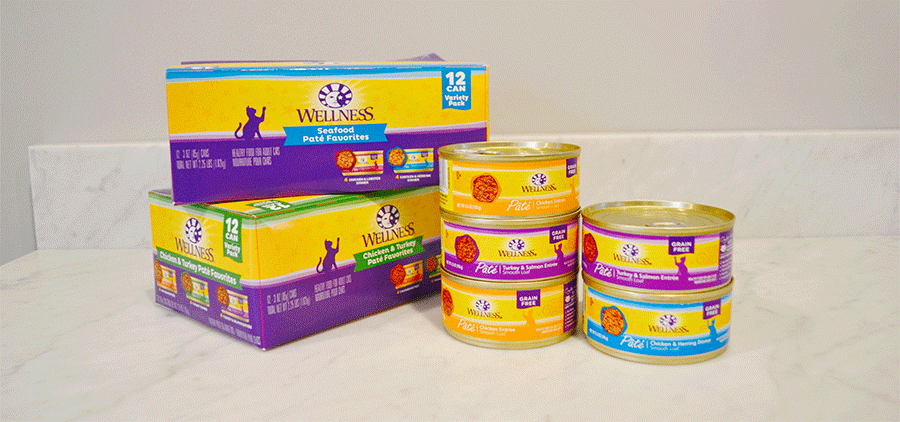
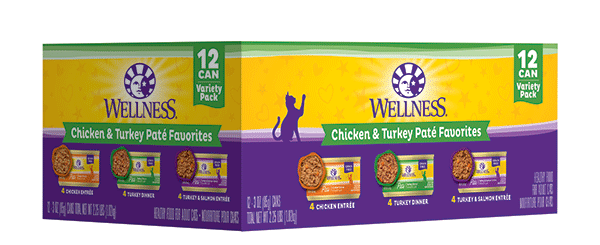
Newfound convenience is served up with Wellness Complete Health® Variety Packs, a rotation of top-selling Complete Health wet recipes designed to diversify mealtime easily throughout the week while satisfying appetites, Catisfaction Guaranteed. And it’s true! Nine out of 10 cats love Wellness Complete Health , but if a flavor isn’t approved by kitty, any unused product in its original packaging, along with the purchase receipt can be returned to the store where it was bought for a full refund. New Variety Packs deliver the convenience cat parents look for when purchasing multiple cans of wet food with the variety and flavor cats crave. They will be offered in 12-packs and 24-packs, with three feline-approved flavor and texture variations packaged in 3 oz. cans so that pet parents can effortlessly customize the dish of the day—keeping it consecutive or mixing things up.

Each wet recipe provides a healthy source of nutrition and hydration without grains, carrageenan, artificial colors, flavors or preservatives. Complete Health Variety Packs come in three all-natural, wholesome protein categories to entice any feline: (1) Chicken & Turkey Pâté Favorites: Chicken Entrée, Turkey Dinner and Turkey & Salmon Entrée, (2) Seafood Pâté Favorites: Chicken & Lobster Dinner, Chicken & Herring Dinner and Turkey & Salmon Entrée and (3) Chicken & Turkey Lovers: Gravies Chicken Entrée, Minced Chicken Dinner and Minced Turkey Entrée.

Wellness Complete Health recipes with Wholesome Grains are back by “paw-pular” demand to meet pet parents’ interest in the option of a diet that includes wholesome grains. Offered alongside grain-free options, the reintroduction of the best-selling grained recipes will help pet parents find the perfect formula for their cats among the widened variety of protein and antioxidant-rich, balanced recipes from Complete Health.

Wellness Complete Health formulas with wholesome grains focus on premium protein, vitamins and minerals enriched with healthy, fiber-rich grains to support the signs of wellbeing. Each package of dry food will be available in 6 lb. bags, crafted with only the best ingredients including Omega-3 and Omega-6 to support cats’ skin and coat, pre- and probiotics to aid healthy digestion and a balance of high-quality proteins, select fats and carbohydrates for the energy cats need to thrive. 

Grained recipes will be offered in four land and sea variations appealing to felines’ favorite flavors: (1) Adult Salmon & Salmon Meal, (2) Adult Health Deboned Chicken & Chicken Meal, (3) Indoor Deboned Chicken & Chicken Meal and (4) Natural Hairball Control Chicken Meal.

“There are valued nutritional benefits in both grained and grain-free food for cats, and now we are offering both options for those pet parents looking to feed our trusted Complete Health formula,” says Chanda Leary-Coutu, Director of Marketing Communications and Consumer Experience for Wellness Natural Pet Food. “We’re committed to empowering pet parents and putting them in control of what they provide their pets, and we do so by presenting an array of innovative, healthy choices both with and without wholesome grains for a balanced selection you can count on serving up with ease.” 

Both Wellness Complete Health with Wholesome Grains and Wellness Complete Health Variety Packs will be available at select pet specialty retailers, independent retailers and online. They will also be on showcase at Global Pet Expo in Orlando, FL at Booth 3767. 
 

Top 5 Healthy Cat Food Ingredients [Checklist]

Wellness Complete Health Natural Healthy Cat food copyrighted

You are what you eat – and the same goes for your cat! Here’s what you need to look for in your cat’s dry food. 
When you start your search for a quality dry cat food, you need to first do your research. After all, a quality dry cat food is only as good as its ingredients. Before you start shopping, you should know how important the ingredients are – and that’s why we’re going to talk about the top five healthy cat food ingredients you need to see on the label. 

✔ Protein as the First Ingredient

Cats are obligate carnivores, and as such, a quality dry cat food needs to list a protein as its first ingredient – no exceptions! Not only that, but the protein needs to be named – it shouldn’t just list “meat.” Look for chicken, turkey, lamb, or salmon. When you look at any of Wellness’ cat food recipes, you’ll notice that a high-quality protein is listed right at the top of the ingredient list. 

✔ Omega 3s and 6s

Essential in supporting your cat’s immune system and other important biological functions, Omega 3 and 6 fatty acids can be found in fish oil, eggs, and flaxseed. A quality dry cat food includes Omega 3 and 6 fatty acids, which will also help give your cat smooth skin and a gorgeous coat.

✔ Vitamins and Minerals

A robust list of vitamins and minerals should be a part of a quality dry cat food. Not only do they provide a complete and balanced diet, but they support a healthy immune system and promote a shiny, healthy coat. On the list of ingredients, look for water-soluble vitamins B12 and C, plus minerals such as calcium, iron and zinc.

✔ Healthy Fats

On top of Omega 3 and 6, other healthy fats are essential in a quality dry cat food, especially when it comes to storing energy. Did you know that cats need 20 to 24 percent fat in their food? That means that both protein and fat need to be relatively high to ensure a healthy diet. 

✔ Probiotics

You should also look for guaranteed levels of probiotics to support digestion. This is the “friendly bacteria” that reside in your cat’s digestive tract. Probiotics promote a healthy balance of bacteria in the gut, which is important for complete digestion and absorption of nutrients. As well, probiotics help keep your cat’s immune system strong, making them a must-have ingredient for cats with digestive disorders.

What a Cat Food “Shouldn’t” Have

Just as important as what’s in your cat’s food is what isn’t in it – ingredients that could make your kitty sick.

✗Chemicals and Preservatives

Chemical preservatives such as Butylated Hydroxytoluene (BHT) and Butylated Hydroxyanisole (BHA) are used to preserve dry cat food, but they’re are being looked at as the cause of certain cancers. 

✗ Food Dyes

Food dyes are often added to foods to make them more appealing to humans – but offer no benefits to cats. Certain food dyes, such as Blue 2, Red 40, and Yellow 5 and 6, have been proven to cause allergic-type reactions and behavior problems. You may have heard about caramel color, which contains 4-methylimidazole (4-MIE), an animal carcinogen. 

✗ Carbohydrate Fillers

When a cat food includes fillers, they can make up about 50 percent of the bag. And carbs just aren’t good for cats, especially seniors and overweight cats.  Manufacturers often use wheat gluten or corn meal as a filler, as it’s a less expensive alternative to meat protein and whole grain/grain-free sources.

✗ Rendered Fat

Who would think that rendered fat is a flavor enhancer – yuck! It’s true – rendered animal fat can be added to kibble, but can lead to a host of problems, as it can introduce microorganisms (Salmonella) and toxins. 

Which Dental Chews Are Right for Your Dog?

WHIMZEES Dog dental Chews

Dog dental chews are a great way of helping keep your dog’s teeth clean. With so many products available the following are 6 quick points to consider when next in the dog treat aisle choosing a chew for your dog. Following these tips will ensure you choose a chew that is tasty and safe but one that is the most effective at removing plaque and tartar whilst keeping their breath fresh:

1. Look at the ingredients:

  • Ensure that an edible dental chew contains high-quality natural ingredients to promote the health and wellbeing for your dog as well as keep their teeth clean. The back of a dental chews pack will often highlight if a brand contains non-GMO ingredients as well as show the ingredient list in order of most abundant to the smallest ingredient inclusions. 
  • Look for ingredients you recognize like potatoes or chicken
  • Avoid non-specific ingredients like ‘meat meal’ or generic ‘cereals.’ These open ingredient descriptors don’t give you visibility as to the source of that ingredient, meaning they are inferior ingredients.

2. Where is it made? 

Knowing where your dog’s dental treats are made gives assurance on the level quality and safety involved in making a chew that your dog will eat. At North American and European manufacturing sites, companies must meet very strict industry standards that ensure the highest quality chews are available to your pet. In other markets such as China, these industry controls may be missing and create a chew with lower quality standards.

3. Have Sensitivities? Avoid common allergens:

Less is more. Some dogs suffer with sensitivities to certain foods or they may occasionally get an upset tummy after eating certain products. For these dogs it’s helpful to choose a product with limited ingredients (LID) or a short ingredient list. LID chews don’t include potential allergen ingredients like beef, dairy, chicken wheat and soy. A grain-free, vegetarian dental chew is often a great solution for food-sensitive dogs. 

4. Scientifically proven:

The overall efficacy of dental chews varies. Look for a chew proven to promote dental health, such as one with the Veterinary Oral Heath Council (VOHC) Seal of Acceptance.The VOHC ensures products that make the list have met their high scientific standards for proving reduction of plaque and tartar. WHIMZEES Dental Chews have undertaken substantial scientific studies and have been accepted for both VOHC Plaque and VOHC Tartar reductions making it a leading dental chews for dogs.

5. Right size chew:

Why? Choosing the proper size dog dental chew ensures the chew has the correct amount of calories for your dog. Dog dental chews should also match your dog’s mouth size. This ensures optimal cleaning and minimizes the chance of your dog swallowing a large piece that could cause stomach upset. 

6. Daily use is key to success:

Plaque can accumulate in as little as 24 hours so just like us, it’s important to support your dog’s teeth with a dental chew every day to keep their teeth healthy. A chew that tastes great and comes in a larger value bag is a great way of ensuring your dog looks forward to his daily dental chew as well as be the most economical solution. 

5 Ways to Prevent Dental Disease in Your Dog

When thinking of all the things a new puppy will need, most pet parents are on top of the essentials – dog bed, bowls, collars, etc. They diligently research the best foods, they book in their vet checks and vaccinations and sign up for puppy training classes. There’s no doubt that this new pair are off with a  great start to what will be a fabulous life together, but alarmingly most pet parents are forgetting to address the number 1 health issue that will affect their young puppy as he ages—his teeth!

Puppy and Dog Oral Health- Importance of Establishing a Routine

  • Puppies are born with no teeth and develop sharp puppy teeth after a few weeks.
  • Their permanent teeth grow in at 4-6 months. Not many puppy owners will report to seeing the baby teeth fall out, but every new puppy owner will testify to their new pup’s desire to chew everything in sight during these teething months to help ease their discomfort. 
  • Whilst stocking up on chew toys is a given, the other, more important consideration is establishing a daily tooth cleaning routine with your puppy.  
  • Bacterial plaque starts to accumulate on teeth within 24 hours and if not removed each day this plaque will harden to form tartar.
  • Dental disease progresses from tartar to gum inflammation, bad breath, loosening of the tooth attachments and significant pain.

Dental disease affects 80% of adult dogs and 96% of senior dogs.  

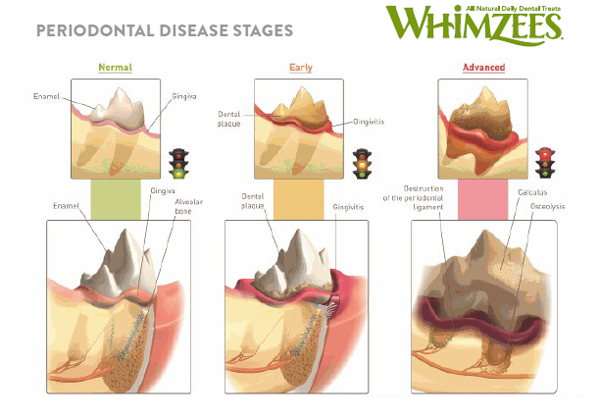
This graphic shows a healthy dog’s mouth, along with examples of what early and advanced dental disease looks like in dogs.

To ensure your new puppy is not going to end up with poor dental health as an adult, the best thing a new pet parent can do is start cleaning their dog’s teeth at 3 months old, or as soon as adult teeth start to come in. So how do you do it? Here are 5 tips and tricks to make daily dental time a breeze:

1. Start brushing their teeth from when you first bring your new puppy home

In the first 16 weeks of a puppy’s life they are learning so much about the world around them. Getting them used to having you open their mouth and brush their teeth at this age will ensure they are more  tolerant of it as they age.

2. Brush the right way

There are several different brushes or finger brushes available, but the most important factor is to ensure that in time, you are able to brush all your ’s teeth both front and back on both the inside and outside of each tooth.

  • Start by rubbing your finger around their mouth
  • Move to a finger brush
  • Progress to a toothbrush to help reach the back teeth.
  • Use dog-specific toothpaste for safety and a flavor your puppy will like. Human toothpaste is not safe for dogs.

3. Incorporate a way for your dog to clean his own teeth

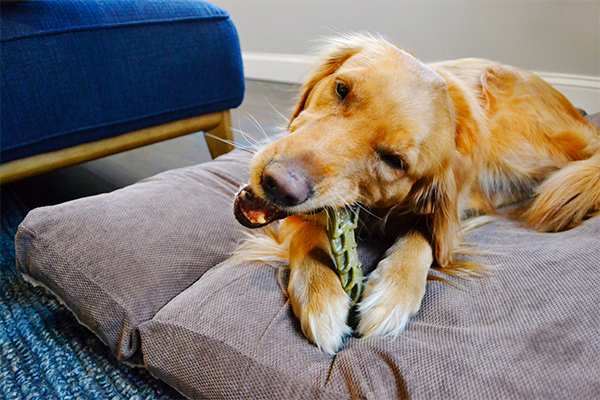
This pup is enjoying a WHIMZEES Brushzees dental treat while cleaning his teeth.


Whilst brushing your puppy’s teeth is the gold standard technique for keeping his teeth clean, we know it’s one of the least favorite parts of owning a dog for most pet parents.

In fact, only 2% of pet parents brush their dog’s teeth each day.

To help combat dental disease, an alternative to brushing is letting the dog do all the work with a dog dental chew. Scientifically-proven and VOHC accepted dental chews are a great way to look after their teeth each day while giving them a treat they love. The other important thing when it comes to puppies is to ensure the dental chew you give is suitable for puppies as young as 3 months. This is key to make sure the chews are the right amount of calories, and a safe texture and size to suit their developing mouths. 

Once your puppy has reached nine months, you can switch to an adult dog dental chew that is the right size for your dog based on their weight. WHIMZEES All Natural Daily Dental Treats are made with non-GMO ingredients, are vegetarian and grain-free. WHIMZEES are proven to be twice as effective as leading dental health chews.

4. Make sure it is daily

Plaque can accumulate in as little as 24 hours so just like us it is important to support your dog’s teeth with a dental chew every day to keep their teeth healthy. A chew that tastes great and comes in a daily value bag is a great way of ensuring your dog looks forward to his daily dental chew as well as be the most economical solution.

5. Don’t delay!

Puppy AgeHuman Age
3 months4 years
4 months5 years
5 months6 years
6 months7.5 years
7 months9 years
8 months10 years
9 months11 years
10 months12.5 years
11 months14 years
12 months15 years

A puppy grows so much in his first year that by the time he has his first birthday it is the equivalent of 15 human years! Hence just starting to clean his teeth a few months later in his life can quickly become the equivalent of starting to brush his teeth only when he is a teenager. That’s why it’s best to start your puppy’s oral health care routine at 3 months old.

Five Winter Activities for You and Your Dog

josh & koda

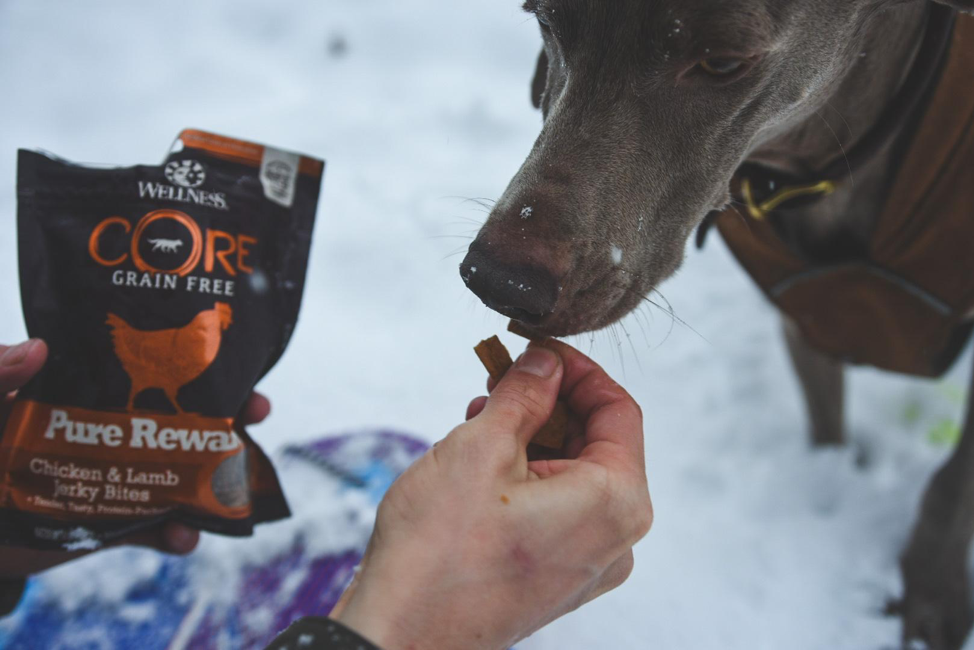
Winter can seem like a long and boring season for your pup and it is often hard to think of new ways to engage with your pet during these cold months! Here are five of Koda’s favorite things to do in the wintertime!

core

Take a (Short) Hike!

Koda always gets stir crazy staying inside all day and doesn’t have enough fur to keep him warm enough to be outside all day, so taking short day-hikes are our favorite way to get outside and let him run around! We are fortunate to live in the Pacific Northwest where we can find countless trails so close to us. Getting out of the house and exploring even for just an hour or two in the wintertime is not only good for your pet, but for you too!

yellow

Stay In!
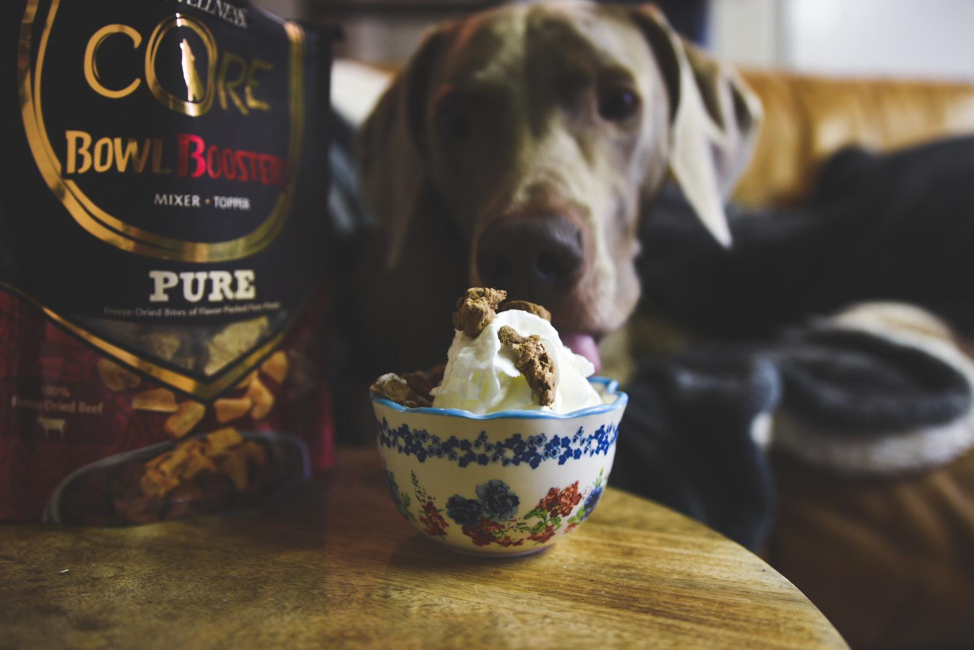
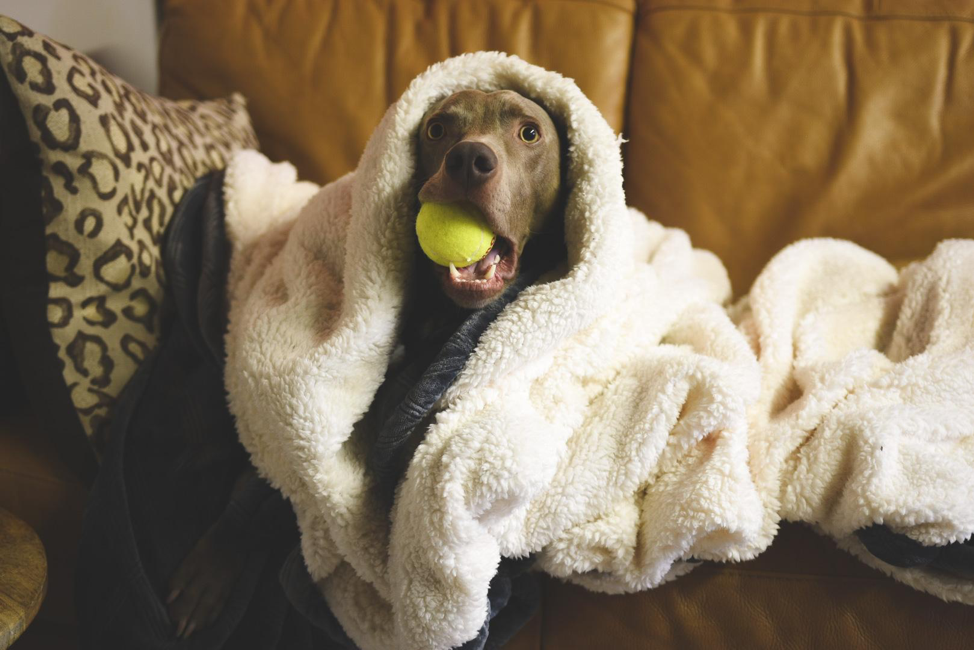
It can be tough to get outside in the wintertime, especially when it starts to snow. If you get snowed in or just want to stay cozy inside, there’s still plenty of fun to be had with your dog! On days we stay in, Koda and I like to practice tricks, snuggle up with some fuzzy blankets, or do an at-home workout! Winter is also the perfect time to practice baking some homemade treats or a puppuccino!

cozy

ball

Sledding
Koda has to be involved in absolutely everything we do so this year when we went sledding, Koda hopped right on with me! He loved every minute of it – he had so much fun chasing us up the hills and then riding the sled with us on the way down!

sled

Have a Snow Day!
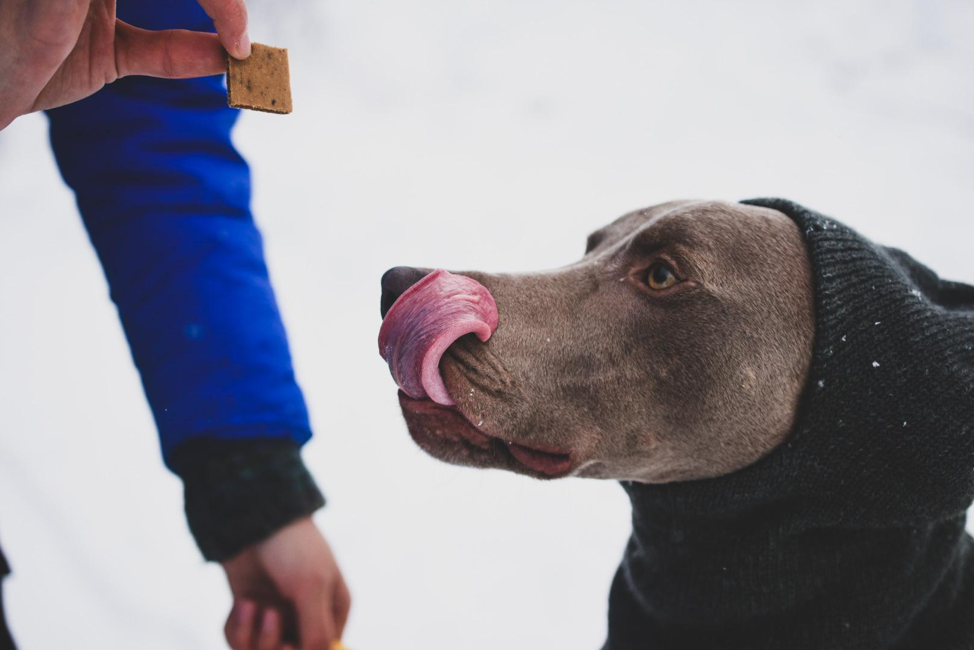
Koda loves playing in the snow, but the roads can get nasty in the winter, making it hard to get out of town. We’ve invented several games out in the snow with him that you can play right in your backyard! One of Koda’s favorite snow day activities is catching snowballs filled with wellness treats!

snow

treat

Errands 
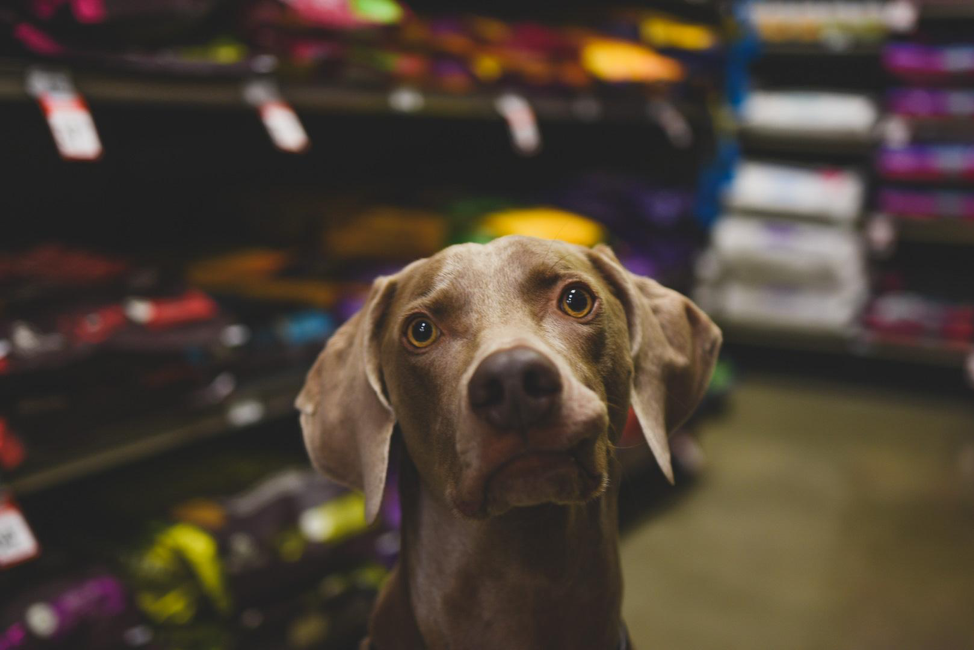
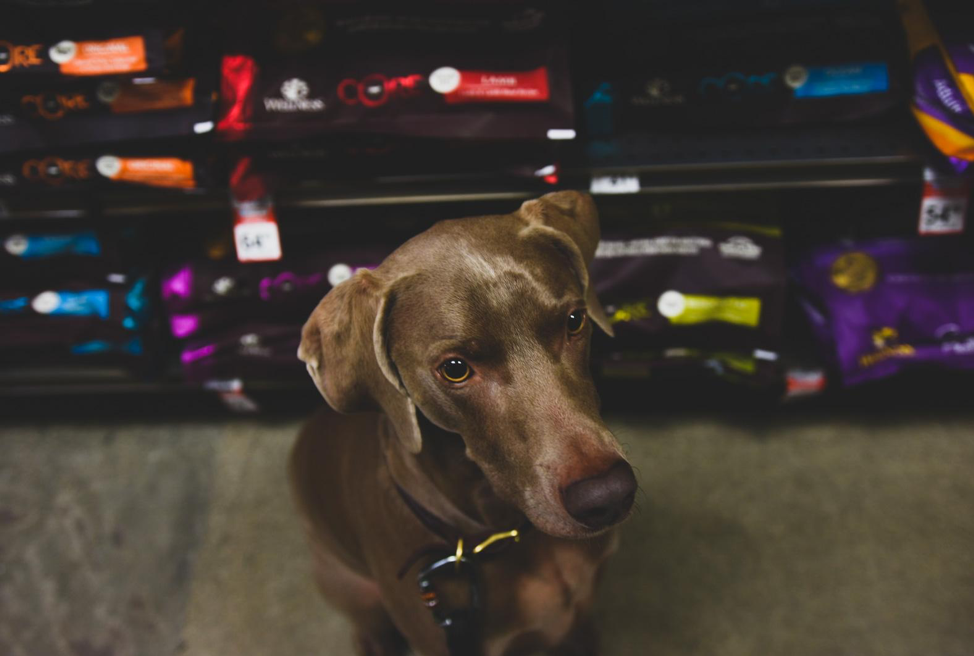
If the weather doesn’t allow you to go exploring but your pup needs to get out of the house, taking them with you on quick errands is a great way to expend some of that pent up energy! Koda loves going with us on our trips into town. We try to include a stop that he can come into the store with us. I think Koda likes to run errands so much because he knows we’re going to stop into a pet store to pick up a toy or a bag of his favorite Wellness Treats!

errand

store

Staying active year-round is so important for your dog’s health and these are just a few of the many ways to have fun with your dog in the wintertime! We hope you and your dog have as much fun with these activities as Koda and I do!


koda

How often should you change your pet’s water?

change pets water

Keep your pet happy and healthy by providing them with fresh water

As a pet parent, you know that clean, fresh water is vital to your pet’s health and happiness. Water is essential to all living things, and your pup and feline are no exception! Like most mammals, your pet is made up of 2/3 water. Without adequate water, your pet can become dehydrated or even experience severe health issues, including urinary and kidney problems, or even death. Since you know the importance of water to your pet, you probably already make sure that your furry friend always has something to drink. But are you changing their water enough? 

What water does for your pets

Pets need adequate water to ensure proper organ function, joint lubrication and food digestion. Water carries important nutrients to cells of the body. It helps your pet digest his food and absorb the nutrients from his kibble. Water helps your pets move easier by keeping their joints nice and lubricated. Internal tissues and the spinal cord are also cushioned by moisture. Water also helps your pet eliminate wastes through urination and bowel movements. 

Every important body function requires water. Without enough water, your pet can become ill and dehydrated. Some warning signs of dehydration include sunken eyes, pale and dry gums, and dry skin. Your pet may also seem lethargic or depressed of have no appetite if he isn’t getting enough water.

Providing your pets with adequate water

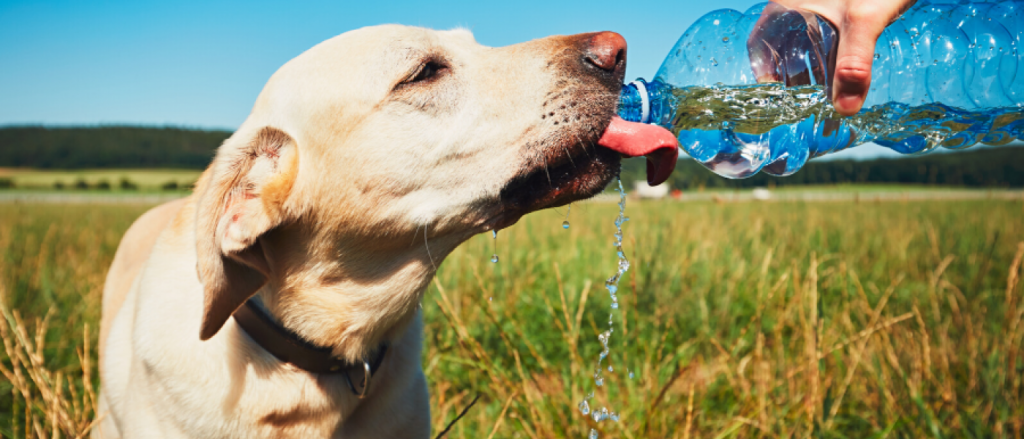
So how much water should your pets drink? A variety of factors, including your animal’s diet, age, environment and health conditions, will influence just how much water your pet needs. Your dog or cat might also drink more water during the summer months. Keep your pet’s water bowl full and watch out for warning signs of dehydration to ensure that your furry friend is getting enough to drink. Some of those warning signs include sunken eyes, pale and dry gums, and dry skin. Your pet may also seem lethargic or depressed of have no appetite if he isn’t getting enough water.

You don’t need to worry about monitoring your pet’s water intake for the most part. Most pets will drink enough water on their own to stay well hydrated, but pets suffering from illnesses such as metabolic disorders, kidney disease and cancer can become dehydrated faster. Pregnant and nursing animals will also need to consume more water. If your pet eats a diet including wet food, he will naturally drink less water. Animals who primarily consume a dry food diet will need to drink more water.  If you’re worried about how much water your pet is drinking, you should consult your vet for advice. 

How often should your change your pet’s water

Pets need constant access to clean water – water should be changed at least once daily. Keep your pet’s bowl fool and make sure to fill with fresh water every single day. It’s also important to keep your pet’s water bowl clean. Microbes from your pet’s saliva can be transferred to the water bowl, encouraging the growth of bacteria. You should wipe your pet’s bowl dry each day before refilling it with clean water. Every few days, wash your pet’s bowl with hot soapy water, or more if necessary. Choose stainless steel, porcelain or glass bowls over plastic. If you use a fountain to keep your pet hydrated, make sure to clean it at least once a week and regularly replace the fountain filters. 

Make sure to keep your furry family member happy and healthy by providing him with daily fresh water and a clean water bowl. Your pet’s health is important, and providing your pet with clean water and help ensure that your kitty or pup will stay around as long as possible.


Keeping your pet happy and healthy is important to you, and we understand you only want to give your pet the very best. Keep your pets looking and feeling their best when you treat them to Wellness Pet Food. When you give your pups and felines Wellness Pet Food, you can be sure that their health and happiness are taken care of, since our food and treats are made with natural ingredients and crafted with your pet’s wellbeing at heart.


Prevent Bad Dog Breath with These 5 Tips

Prevent bad dog breath

Doggy breath is something no pet parent wants to face, especially when your dog tries to cover you in kisses. Many pet parents may consider stinky dog breath just a normal reality of having a dog, but that’s not the case. In fact, bad dog breath can be a key sign that your dog may be suffering from a more serious health concern such as dental disease, diabetes or kidney and liver disease.
Here are 5 quick tips on how to keep your dog’s teeth healthy and their breath fresh:

1. Take your dog to the veterinarian annually:

The most common cause of bad dog breath is poor oral hygiene and periodontal disease. Your veterinarian is also your dog’s dentist, so ensuring your dog has their annual checkup is key to keeping them healthy. Should there be signs of dental disease, your vet can perform a professional cleaning. During this procedure, your vet will remove plaque and tartar, evaluate and resolve mouth infection and extract any loose or compromised teeth. This will not only have your dog feeling a whole lot better, but it helps reduce the overall bacterial presence that were key contributors to your dog’s bad breath.

2. Keep their mouth clean – Brushing:

dog getting teeth brushed
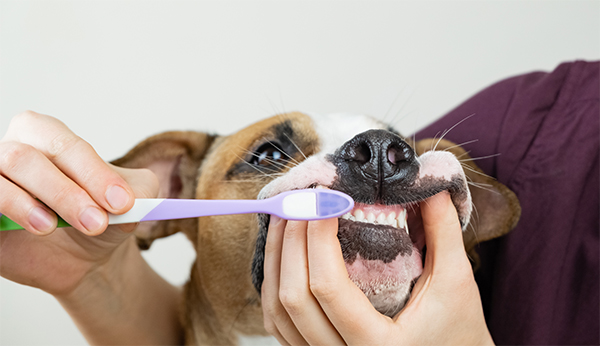
It takes as little as 24 hours after a professional cleaning for bacteria to start accumulating on teeth as plaque. To help keep this in check, the gold standard technique is to brush your dog’s teeth every day with special doggie toothpaste (never use human toothpaste). Brushing mechanically removes plaque from the teeth, leaving them clean and leaving the mouth smelling fresher. 

3. Keep their mouth clean – Dental Chews:

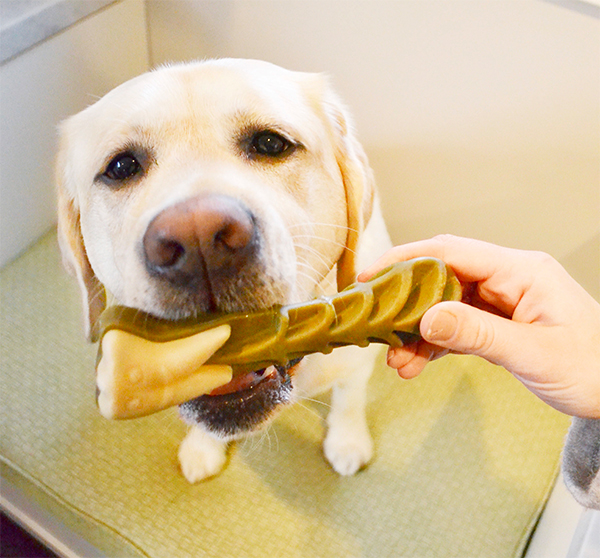
Labrador dog getting WHIMZEES dental treat

This Labrador dog loves WHIMZEES Brushzees!

For most pet parents, the thought of brushing their dog’s teeth creates feelings of anxiety and stress. Hence, it’s not surprising that only 2% of dog parents brush their dog’s teeth every day. An easier approach to cleaning your dog’s teeth is to use a scientifically proven dog dental chew like WHIMZEES Dental Treats. These dental treats work like a toothbrush because as a dog chews the treat, the WHIMZEES rubs against the teeth to remove plaque and bacteria. Best of all, designed with ridges, grooves and nubs, WHIMZEES Dental Treats ensure the treat reaches the whole mouth including the back teeth which are usually hardest to reach.

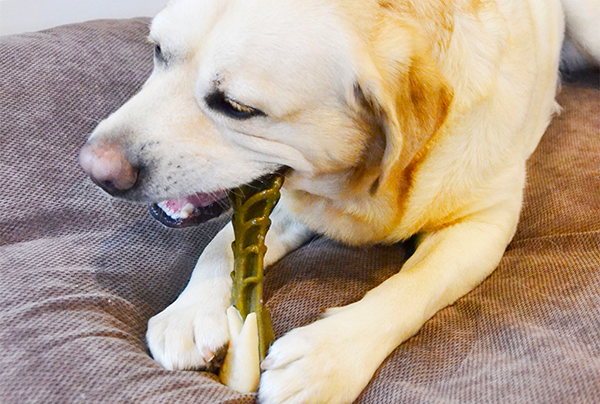
Labrador cleaning teeth with WHIMZEES dental treat

WHIMZEES dog dental treats help target hard-to-reach back teeth.

4. Keep an eye on what he eats and drinks:

We all know dogs tend to eat some inappropriate things if given a chance such as feces, garbage or other stinky substances. Should this be your dog, ensure their yard is always clean, they are kept on a lead during walks and that they no longer have access to garbage bins. Prevention is the cure on this one!

5. Keep them healthy:

Feeding your dog a high-quality natural, balanced diet and providing them with plenty of water, activity and exercise is key to keeping them in good health. Along with these daily habits, be sure to visit the vet at least once a year to ensure your dog is at an optimal weight and to check for other health problems that could present with bad breath such as diabetes. Should dental disease not be the cause of your dog’s bad breath, the annual checkup can help your veterinarian pick up on the underlying cause of your dog’s bad breath before it gets serious.

20 Things Your New Puppy Needs

puppies

Getting a new puppy can be an exciting – and sometimes overwhelming! – experience. But don’t worry. With the right supplies and lots of love, you’ll be the best puppy parent in no time! Below is a list of things your new puppy needs when he comes home to live with his forever family. 

What to buy before bringing your new pup home

1.    Quality puppy chow
2.    Puppy treats
3.    Identification
4.    Water and food bowls 
5.    Puppy pads
6.    Leash
7.    Crate 
8.    Collar
9.    Bedding
10.    Shampoo
11.    Grooming Brush
12.    Ear cleaning solution
13.    Teeth cleaning supplies
14.    Dog nail trimmer 
15.    Puppy gates 
16.    Puppy toys
17.    Flea and tick medication
18.    Enzyme cleaner
19.    Anti-chew spray
20.    Veterinarian

Now that you know what your new puppy needs, keep reading to see why he needs them!


1.    Quality puppy chow.

Make sure to provide your puppy high-quality food that has the right mix of nutrients specifically formulated for his age, size and development. Wellness Pet Food has an array of yummy wet and dry recipes made just for puppies! Made with premium natural proteins, wholesome whole grains and antioxidants, your puppy will receive the right nutrients he needs as he transitions into adulthood.

2.    Puppy treats.

Keep some healthy treats on hand to reward your pup. Try out these Wellness Soft Puppy Bites, which are formulated without meat by-products, corn, wheat, dairy, artificial colors or flavors. They also come in two great flavors that your puppy will love! 

3.    Identification.

You’ll want an identification tag with your puppy’s name and your current contact information in case of emergency. Also talk to your vet about microchipping, which is a simple and permanent form of ID that can help reunite you with your lost puppy. 

4.    Water and food bowls.

When looking at water and food bowls, purchase stainless steel, which collects less bacteria. 

5.    Puppy pads.

When house-training your puppy, arm yourself with some absorbent puppy pads to make the clean-up job easier.

6.    Leash

 Look for an adjustable leash to hook onto your puppy’s collar for walks around the neighborhood. 

7.    Crate.

Whether you’re crate training or need a portable crate to transport your puppy, choose the appropriate size to keep him feeling secure. You might need to purchase larger sizes as he grows into adulthood. 

8.    Collar.

Find an adjustable soft collar that will fit comfortably around your puppy’s neck. You might go through a few collars as his size increases. 

9.    Bedding.

Keep your puppy warm and snuggly during naptime with soft and comfortable bedding. Make sure it’s easy to throw in the washer to keep smells and accidents at bay. 

10.    Shampoo.

Find a gentle puppy shampoo to keep your pup clean and smelling fresh. There are an array of products available, so search for the perfect one suited to your dog’s coat. 

11.    Grooming Brush.

Look for a soft-bristled brush or metal comb for puppies with longer hair to keep his mane tamed and healthy.

12.    Ear cleaning solution.

Find a quality ear cleaner to keep your new puppy’s ears clean and healthy.

13.    Teeth cleaning supplies.

Find dog safe toothpaste and a toothbrush to get him accustomed to having his teeth cleaned. 

14.   Dog nail trimmer.

Puppies have sharp nails that grow quickly and need regular trimming. Purchase a quality dog trimmer to prevent scratches and your dog’s nails from cracking and breaking. 

15.    Puppy gates.

Puppy gates or playpens are a perfect way to let him roam a certain area of your home while keeping him safe when you’re not around.

16.    Puppy toys.

Puppies love to play, and playtime is important as your puppy teethes and becomes part of the family. Look for interactive toys so you can join in on the fun!  

17.    Flea and tick medication.

As your pup explores the great outdoors, keep him safe from pests with flea and tick medication. 

18.    Enzyme cleaner.

Accidents happen – enzyme cleaners destroy the scent of your puppy’s accidents so he won’t try to use the same spot again. 

19.    Anti-chew spray.

As you puppy proof your new home, look for a natural spray that will deter him from chewing items you can’t keep out of his reach.

20.    Veterinarian.

Your veterinarian will be able to address your concerns, while keeping your puppy up-to-date on vaccinations. 

When preparing for your new pup, remember to keep him looking and feeling his best with quality chow from Wellness Pet Food. When you give your puppy Wellness Pet Food, you can be sure that your puppy will receive the best nutrition to fit his growing needs, since our food and treats are made with natural ingredients and crafted with your pet’s wellbeing at heart.
 

About This Page

Date:

03/01/2020

    Be the best pet parent you can be. Join for expert advice.

    Sign Up